Sports Lighting

Glare at football field

Understanding UGR and GR in Sport Lighting

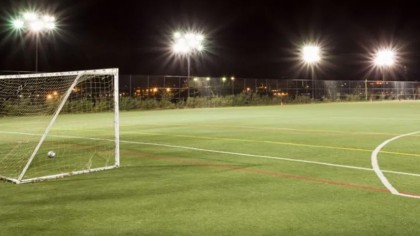
Glare is a critical factor to consider when designing lighting systems for sports facilities. In this guide, we will explore the significance of Unified Glare Rating (UGR) and Glare Rating (GR) in assessing and managing glare in sport lighting. We will also delve into the role of photometric plans in evaluating lighting designs. Understanding these concepts will help create optimal lighting conditions that enhance athletes’ performance and ensure their safety. What is Glare? Glare refers to the discomfort or impairment caused by excessive brightness or contrast in the visual field. In sports environments, glare can negatively impact athletes’ concentration, visibility, and overall performance. It can arise from direct sources or be reflected off surfaces, affecting both players and spectators. Introduction to UGR and GR UGR and GR are standardized metrics used to quantify and evaluate glare in lighting systems. UGR specifically focuses on indoor lighting, while GR encompasses both indoor and outdoor environments. These metrics consider various factors such as luminaire characteristics, observer position, and surrounding conditions to determine the level of glare experienced. The Significance of Photometric Plans Photometric plans play a vital role in sport lighting design and assessment. These plans provide detailed information about light distribution, illuminance levels, and glare analysis. By utilizing photometric data, designers can identify areas of potential glare and optimize lighting setups to minimize its effects. Evaluating UGR and GR in Sport Lighting The evaluation of UGR and GR involves a comprehensive analysis of various parameters. Observer position, viewing angles, luminaire data, and recommended threshold values are considered during the assessment. Different sports activities and spaces may have specific UGR and GR requirements, which need to be met to ensure optimal lighting conditions. The image below displays glare calculations for a 100 x 64m football field. The maximum glare for competition fields should be 50, while for training purposes it should be 55, both measured at a height of 1.5m from the floor. In this specific example, all glare points are below 50. Strategies for Glare Reduction To minimize glare in sport lighting, several strategies can be employed. Proper luminaire selection, effective shielding, and beam control play significant roles. Additionally, the implementation of glare control devices and the use of lighting controls, such as dimming and zoning, contribute to glare reduction and flexibility in adjusting lighting levels. Optimizing Sport Lighting for UGR and GR Achieving optimal UGR and GR levels in sport lighting requires collaboration among lighting designers, architects, and engineers. Ongoing maintenance and monitoring are crucial to sustaining optimal lighting conditions and minimizing glare over time. Regular assessments and adjustments ensure that lighting systems continue to meet recommended standards. Understanding UGR and GR is essential for creating glare-free sport lighting environments. By considering these metrics and utilizing photometric plans, designers can optimize lighting designs to enhance athletes’ performance, safety, and overall experience. Prioritizing glare reduction in sport lighting ensures visual comfort, improves visibility, and contributes to the success of sporting events. By following best practices and staying up-to-date with industry standards, we can create sports facilities that provide outstanding lighting conditions for athletes and spectators alike.

Understanding UGR and GR in Sport Lighting Read More »

Baseball fields 3D render

Baseball Lighting Design

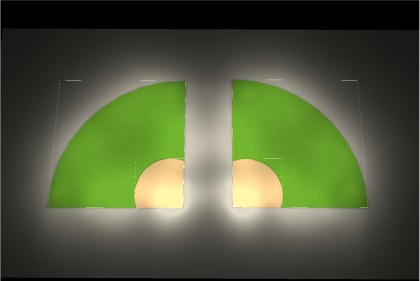
Baseball and softball games require proper lighting to ensure a safe and enjoyable playing experience for everyone involved. In this article is for the essential factors to consider when doing baseball lighting design. LED Sports Lighting LED Sports fixtures are an increasingly popular option for sports fields, due to their energy efficiency brightness, and uniformity. These fixtures are also durable and have a long lifespan, making them a cost-effective choice in the long run. In most cases sport fixtures are Pole-mounted. This is a popular choice for sports fields because it provides a broad coverage area and eliminates the need for additional structures. It’s essential to consider the placement of the poles to avoid obstructing the view of players and spectators. The below image is shown the rules for pole placement of the softball field. Shaded areas indicate recommended pole location. Illuminance Levels Proper illuminance levels are necessary for ensuring player safety and providing optimal playing conditions. It’s essential to have well design photometric plan done from professional lighting designer who will follow the standards and ensure adequate illuminance levels throughout the field. Lighting Design Standards Lighting design standards provide guidelines for designing and installing sports field lighting that meets industry standards and regulations. Adhering to these standards ensures player safety and helps minimize the environmental impact of sports field lighting. Uniformity of Lighting Uniform lighting ensures an even distribution of light throughout the entire field, which results in a consistent playing experience for all players. It’s essential to choose lighting fixtures that provide uniform illumination and follow lighting design standards. Illuminance, uniformity, and spacing for the grip points in the Softball court of Standard Intercollegiate Play should meet the following minimum recommended values Horizontal light levels: 70 fc infield / 50 fc outfieldHorizontal uniformity: 2.0:1 infield, 2.5:1 outfieldGrid spacing: 20 ft x 20 ft Energy-Efficient Lighting Energy-efficient lighting can help reduce electricity costs and minimize the environmental impact of sports field lighting. LED lighting fixtures and lighting control systems can help achieve energy-efficient operation. Glare Control Glare control is critical in sports field lighting as it helps reduce eye strain and improves visibility for players and spectators. Lighting fixtures with proper shielding and optics can help minimize glare and provide a better viewing experience. Illuminance Levels Proper illuminance levels are necessary for ensuring player safety and providing optimal playing conditions. It’s essential to follow lighting design standards and ensure adequate illuminance levels throughout the field. Lighting Design Standards Lighting design standards provide guidelines for designing and installing sports field lighting that meets industry standards and regulations. Adhering to these standards ensures player safety and helps minimize the environmental impact of sports field lighting. Dark Sky Compliance Dark sky compliance is an essential factor to consider in sports field lighting. Lighting fixtures that comply with dark sky regulations help reduce light pollution and minimize the impact of artificial lighting on the environment. Designing effective lighting for baseball and softball fields requires careful consideration of various factors, including LED sports lighting, outdoor sports lighting, pole-mounted lighting, lighting control systems, energy-efficient lighting, uniformity of lighting, glare control, illuminance levels, lighting design standards, and dark sky compliance. By considering these essential factors, you can create a safe, enjoyable, and energy-efficient playing experience for all. I hope you find this article helpful!

Baseball Lighting Design Read More »

tennis lighting

Photometric plan for Tennis fields

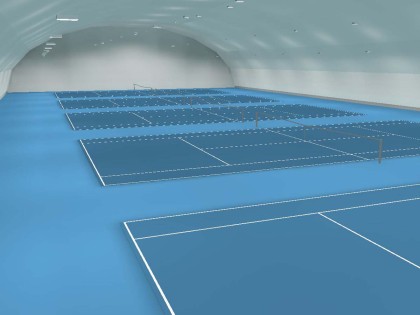
This article describes all of the requirements that should be considered when doing a photometric plan for indoor and outdoor tennis fields. There are several steps that should be fulfilled in order to have professional lighting. Standards for Tennis Lighting According to the European standards for sports fields lighting EN 12193:2019, first, we should define which category will be our tennis field. There are 3 categories and there are different requirements for each category. The table below is shown the minimum requirements for each category. This table is for European standards in lux but it same or very similar to USA standards. Bellow categories are for outdoor and for indoor tennis fields. Planning the lighting poles As a general rule, two poles on each side placed on 10-12m for the two tennis fields is enough. But from my experience, it can go 8-9m from the center. The system with 3 poles on each side 14m apart can be used If there are required higher demands. Three lights setup can be used if fields are required for TV broadcasting where vertical lighting should be very bright or the field is for National or International competition Hight of the poles Hight of the poles is a very important factor that if it is wrong can influence the quality of the lighting, glare, light trespass and etc. Choosing the right height depends on the distance of the pole to the center of the field. Usually, pole heights are 12m or 14m but it can go as low as 8-10m to 17m. Image 4 is showing a pole configuration with 12m high poles placed 10m from the center with 8.5 distance from the middle of the field. Lighting for Indoor Tennis Indoor tennis is usually in special baluns where lights can be up on the construction lighting downward and also can be mounted on the small poles 1-1.5m lighting upward and we have lighting from the reflection of the balun. Most important for indoor tennis is to consider good protection against glare. The best solution for this is to use asymmetrical beam light and be mounted as far as possible from the sidelines, image 5 (last image). In that way will not have glare into the field area. Another solution can be used if we have less asymmetrical beam or even a symmetrical beam to arrange the lights more toward the center of the field. However, we need to ensure that the lights are with a good shield to ensure not to exide the glare. What lights should we need for Tennis? This is a very important part when planning the tennis lights. Good LED fixtures that will fulfill all of the requirements in table 1 with less energy consumption are not an easy task. The wattage for the fixtures typically will vary from 650W to 1400W range but more important is the lumen output with less wattage or to have better efficiency. Nowadays the efficiency of the lights very from 110-160lm/W. Another important factor is choosing the light beam of the fixtures. There are lots of beam angles from narrow beams like 10-15 degrees to wider beams like 40-60 degrees. Regarding the distribution of the light beam, there are symmetrical and asymmetrical lights. For smaller fields without tribune, it is best to use an asymmetrical beam which will distribute the light further way without tilting and will not produce glare. If there is a case like a large stadium with tribunes and the lights are far way from the middle of the field then it used symmetrical beams. Photometric report for Tennis fields Before starting the installation of the poles and lights it is essential to have a very good and professional photometric plan. This plan will tell upfront with desired setup of poles and lights are we fulfilling all of the requirements in Table 1. This can be small but a very important investment compared to the overall price of the tennis field lighting and can save us lots of money and time. If we don’t have a photometric plan or we have unprofessional with many mistakes then we are risking having lots of problems on the field. This can produce a lot of readjustments that take a lot of time and energy. The photometric report is done with professional lighting software like Dialux 3.14, AGI32, Relux, and others software, for example, some lighting companies have their own software. Photometric grid For calculating the light levels of the field is essential to consider the right positions of the measurement points. The next image shows showing positions of the measurement points. 80 % RULE An important factor is to ensure that the three points painted in orange outside of the playing field need to be in 80% of the points on the baseline. On the bellow, the image is showing 3 points per side color in orange that need to be at least 80% from the base points. SHOWING RESULTS IN THE ISO COLORS GLARE CALCULATION Indoor Tennis hall – Project Example Bellow images is showing tennis and Babington hall that needs light improvement. Before upgrading the fields have 20 x 400W MH lights per field, there are 4 fields so a total of 32KW, and current light levels are 750 lux with uniformity Eav/Emin 0.7. Lights are mounted on 7.5m-6m. After making the photometric plan and choosing more efficient LED lights from 200W to 600W with glare reduction, we successfully manage to reduce by half the electricity consumption. With the LED light system installed now, we have electricity consumption of 16KW for the hall while maintaining the same and better light levels. In the next image is shown a photometric report done with Dailux 4.13 software for the tennis hall. Results from the photometric report with the new lighting setup Here is the photometric measurement of the one of fields. Measurements are done on a horizontal surface 1m above the ground. We have average lighting of more than 700 lux and

Photometric plan for Tennis fields Read More »

football playing

Football (Soccer) Lighting

Here I will explain what are the rules for lighting the outdoor football terrain. First, we need to define the right category of the field is it for training or for competition? Choosing the right category of the Football field Bellow, the table is shown an average horizontal illuminance level Eav for training, practice, and competition games. The horizontal measurement grid should be 1m above the terrain. Next, when we define the category we can start planning the lights like wattages, beam angles, color temperature, and pole heights. If it is a new field we can suggest the height of the pole, and if there are already poles installed we can choose lights with a corresponding height of the poles. Choosing fixtures For the football fields mainly there are two types of fixtures. The difference is with the light beam, it can be asymmetrical and symmetrical light beam. Asymmetrical light beam fixtures are used if there is a shorter distance from the pole to the field, and if there are longer distances fixtures with symmetrical beams are used. Fixtures with small beams 15-30 degrees that are pointed on the field and do not extand beyond the field lead to high lighting efficiency and reduce the glare of the players to a minimum. Fixtures shoud be mechanically resistant and protected against corrosion. Basic rules for pole placement The right arrangement of the poles where are installed lights have a significant impact on the light in the field. There are some of basic rules that should be followed for installing poles on football fields. Image 1 shows the arrangement of the poles in a football terain with 6 poles ( 3 by 3 arrangement). The first rule is that It is important to have safety distances from the poles to the edge of the playing area. This distance should be at least 3m. The second rule is not to place poles in the area 15 degrees left and right from the center of the goal. This is very important because if it is not followed it can cause the blinding of the goalkeeper. L = field lengthe = safety distance 3m – distance from the poles to the edge of the field a = distance from the corner to the pole15° = area in which no lights may be placed due to blinding of the goalkeeper In the field, with 4 poles same rules apply to the field with 6 poles. What are the lighting rules that should be met? Before any installation, it is crucial to prove by a photometric plan that all of the lighting requirements like illuminance, uniformity, glare, and illumination on the goals are met. Pole height is important to determine in order to reduce the glare and to ensure good illuminance and also uniformity of the playing field. Tilting of the lights must be ≤70 degrees vertically and the mounting height should comply with the following minimum values: Small fields Lph = 14 m, for 6 poles with lights Fields with 64x100m Lph = 16 m, for 6 poles with lights, Lph = 18 m for 4 poles with lights Playing fields 68 x 105 m and larger Lph = 18 m Football field with poles placed near the corners Placing the poles on the corners of the football field is usually done if we have a circular running track around the field.

Football (Soccer) Lighting Read More »

indoor tennis court lighting design stetra

Sports Fields Lighting

Playing all kinds of sports can be very fun when playing at night, especially on warm days like in summer or spring. For full enjoyment of the game is critical to have good lighting that will fulfill the minimum lighting requirements while maintaining minimum glare. Another important factor to consider especially nowadays with world energy crises is to spend a minimum amount of electricity. Before upgrading your sport field like tennis, soccer, baseball, or any other with new lighting most important is to consider a professional light plan. Planning the lighting in the form of a photometric report will produce the most effective illumination of the court and will improve visibility and reduce glare. Here are some tips to consider before upgrading the lighting. For now, I will elaborate on tennis field lighting. Choosing the right category of the Tennis Light Field According to the European standards for sports fields lighting EN 12193:2019, first, we should define which category will be our tennis field. There are 3 categories and there are different requirements for each category. The table below is shown the minimum requirements for each category. This table is for European standards in lux but it same or very similar to USA standards. Bellow categories are for outdoor and for indoor tennis fields. Next, when we define the category we can start planning the lights like wattages, beam angles, color temperature, and pole heights. If it is a new field we can suggest the height of the pole, and if there are already poles installed we can choose lights with a corresponding height of the poles. Photometric report A photometric report is done by a professional lighting designer and it should be some kind of guarantee that all of the requirements in table 1 will be fulfilled. This small but very important investment can save us lots of money and time. If we don’t have a photometric report or we have unprofessional with no details we are risking having lots of problems on the field. This can produce a lot of readjustments that take a lot of time and energy. The photometric report is done with professional lighting software like Dialux 3.14, AGI32, Relux, and others software, for example, some lighting companies have their own software.

Sports Fields Lighting Read More »