
Baseball Lighting Design
Baseball lighting design works when it does four things at the same time: it delivers the right light levels, keeps the field uniform, controls glare, and limits spill light outside the site. If one of those pieces is weak, the field may look bright on paper but still perform poorly for players, spectators, or permit review.
Baseball is harder to light than many other outdoor spaces because the visual task changes constantly. Players track a fast ball in the air, field ground balls at speed, and react to action across a large irregular field. That means fixture output alone is not enough. The layout, optics, mounting height, and aiming matter just as much as the total lumens.
This guide explains how to approach baseball and softball lighting design in a practical way. It is written for architects, engineers, contractors, developers, school districts, and facility owners who need a lighting plan that is usable, buildable, and easier to approve.
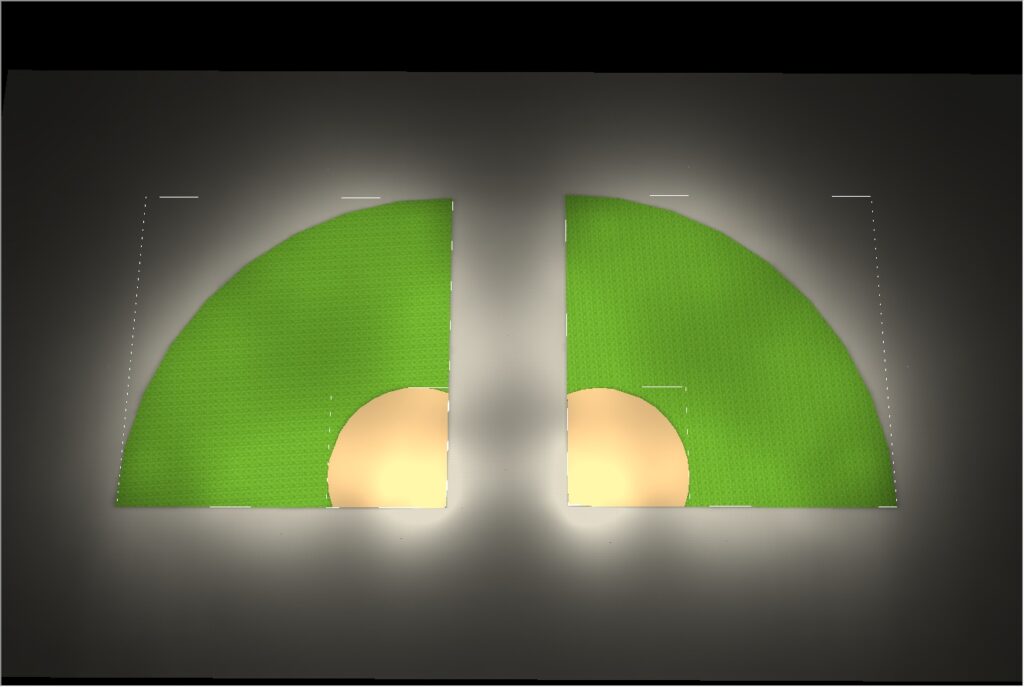
What matters most in baseball field lighting
- enough light on the infield and outfield for the level of play
- good uniformity, so players do not move from bright zones into dark gaps
- controlled glare, especially near home plate, the infield, and fly-ball paths
- limited spill light at property lines and neighboring uses
- realistic pole placement that fits the site and the sport
Baseball also needs a different mindset than a parking lot or walkway. It is not enough to hit average horizontal foot-candles on the ground. The design should also support visibility in the airspace where the ball travels. That is one reason sports lighting plans often need more careful optics and aiming than general site lighting.
Typical foot-candle targets by level of play
There is no single baseball lighting standard that fits every project. League requirements, owner expectations, local ordinances, and whether the field supports practice, games, or broadcast all affect the target. Still, these starting ranges are useful for early planning:
- Youth and recreational baseball or softball: often around 20 to 30 fc in the infield and 10 to 20 fc in the outfield.
- School and more competitive amateur play: often higher, with tighter uniformity expectations.
- College, tournament, or broadcast-driven fields: typically require substantially more light, better uniformity, stronger glare control, and closer coordination with league criteria.
These are planning ranges, not final approval numbers. The correct target should be confirmed against the actual program, the owner brief, and the applicable league or facility requirements.
For a deeper sports-specific reference, see Baseball and Softball Field Lighting Photometric Planning Basics.
Pole placement and mounting height
Pole placement is one of the biggest make-or-break decisions in baseball lighting design. Poor pole positions create glare, long shadows, and uneven coverage that no amount of extra wattage fully fixes.
- keep poles out of the main sight lines for players and spectators
- use mounting height to widen coverage and reduce direct glare angles
- match optics and aiming to the geometry of the diamond, not just the total field size
Fields designed with low mounting heights or rushed pole locations often end up with bright spots near the poles and weak light in transition zones. That can look acceptable in a rough concept but fail once the photometric plan is reviewed closely.
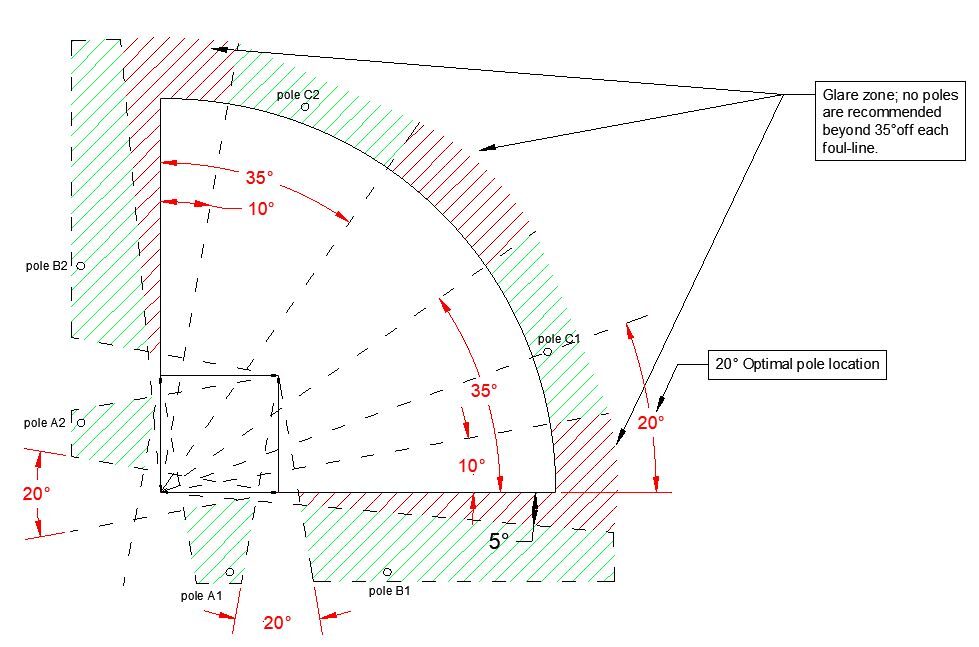
Shaded areas indicate recommended pole location.
Uniformity matters more than people expect
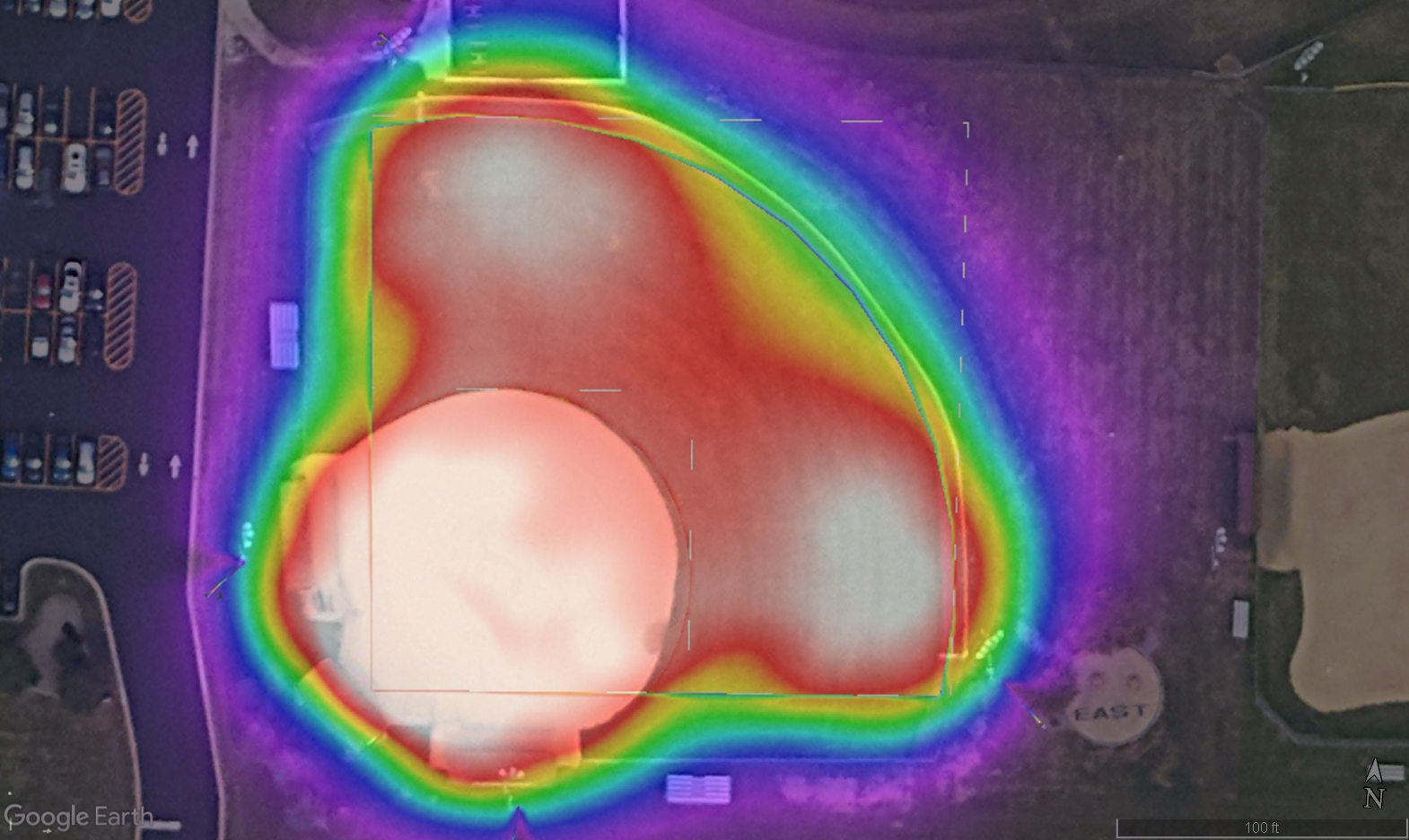
A baseball field can have a respectable average foot-candle level and still be a poor design. If the light drops too hard between poles, the field will feel patchy and players will notice it immediately.
Uniformity matters because baseball depends on fast visual adaptation. Harsh contrast can make it harder to judge ball speed, depth, and movement. It can also make the field look lower quality, even when the fixture count is high.
- average foot-candles
- minimum foot-candles
- uniformity ratios
- areas where light collapses between poles
- overly bright zones that create glare or wasted light
If you need a formal layout review, a professional photometric plan is the fastest way to confirm whether the spacing and optics are actually working.

Glare control and spill light
Glare is one of the biggest problems in baseball field lighting. A field can be bright enough and still feel difficult to play on if players are forced to look into the source. This is especially important near home plate, infield play, and high-ball tracking.
- the right mounting height
- sport-specific aiming
- optics that match the throw distance
- shielding when needed
- fewer overly aggressive hot spots
Spill light matters too. Schools, parks, and mixed-use sites often sit close to homes, streets, or other sports areas. If the design throws unnecessary light beyond the field, it may create complaints, redraws, or permit issues. A strong design checks both on-field performance and off-site impact.
Why baseball lighting design should start with a photometric plan
Baseball lighting design is not a good place for guesswork. Fixture counts and wattage estimates can help with budgeting, but they do not tell you whether the field will perform correctly.
- infield and outfield light levels
- uniformity across the playing surface
- fixture aiming and distribution
- pole height and spacing effects
- spill light beyond the field
- whether the design is realistic for permit review
For sports projects, this matters early. A weak lighting layout can force changes to pole locations, structural work, and electrical scope later in the job.
Common mistakes in baseball lighting projects
- designing only to average light levels
- using generic flood optics instead of field-specific distributions
- setting poles too low
- ignoring glare from the player viewpoint
- treating baseball and softball as identical layouts
- assuming more output automatically fixes weak spacing
- waiting too long to run the photometric plan
Most of those problems cost more to fix after poles and fixtures are selected.
When to bring in professional support
If the field needs to satisfy an owner brief, funding review, school board review, league requirements, or permit review, the project should not rely on rough rules alone. Sports lighting gets expensive fast, and layout errors are hard to hide once the system is installed.
Stetra Lighting helps teams review fixture spacing, optics, foot-candles, uniformity, glare control, and spill light before the design moves too far. That is especially useful when the project involves retrofits, shared-use fields, adjacent neighbors, or tight site constraints.
FAQ
What is the main goal of baseball lighting design?
The main goal is to provide consistent, usable light for play while controlling glare, shadows, and spill light.
Are baseball and softball lighting layouts the same?
No. The field geometry, play pattern, and pole layout strategy can differ. A softball field should not be treated as a simple copy of a baseball field.
Are foot-candles enough to judge a field?
No. Foot-candles are important, but they need to be reviewed together with uniformity, aiming, mounting height, glare control, and spill light.
Why does mounting height matter so much?
Higher mounting heights usually improve coverage and can help reduce harsh glare angles. The right answer depends on the site and the optic, not height alone.
When is a photometric plan necessary?
It is necessary whenever the project needs reliable performance data, permit support, or confidence that the design will work before installation.
Need a baseball field photometric plan?
If you are planning a baseball or softball field upgrade, order a lighting study before fixtures and poles are finalized. Stetra Lighting can prepare a permit-ready photometric plan with realistic foot-candles, optics, glare control, and spill-light review.
Final Conclusion
Good baseball lighting design is not about chasing the highest light level. It is about putting the right light in the right places with the right control. When foot-candles, uniformity, pole layout, optics, and glare control all work together, the field performs better and the project is much easier to defend.