

How Many Foot-Candles Do You Need?
The short answer is this: use foot-candle ranges as starting targets based on the task, then verify the real layout before the project moves forward. A corridor, warehouse, office, parking lot, and sports field do not need the same light level, and a single average number is rarely enough on its own.
Foot-candles help designers turn a vague request like “make it bright enough” into a measurable lighting target. They are useful early in design, but they work best when paired with fixture spacing, optics, glare control, and photometric review.
This guide gives practical rules of thumb for common spaces and explains when a rough target is enough and when you need a full lighting layout.
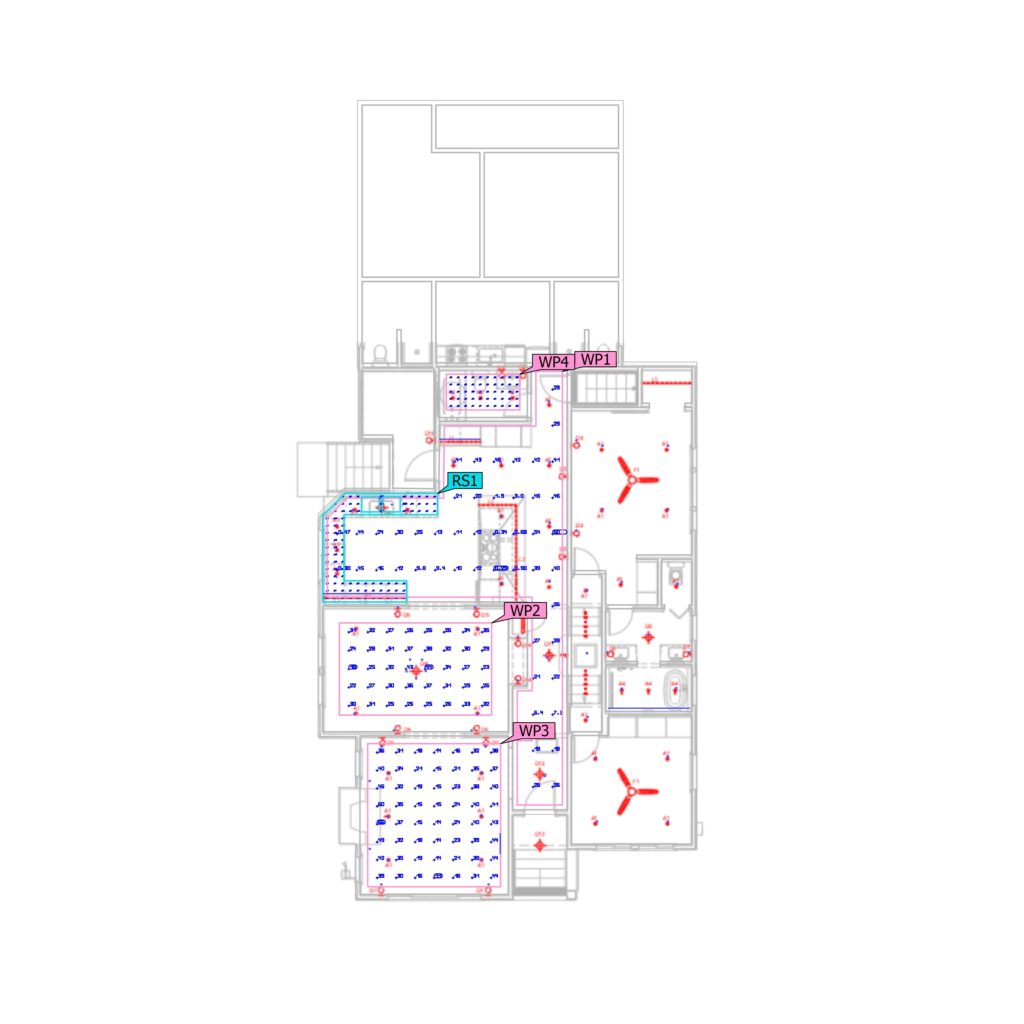
What a foot-candle target really means
A foot-candle measures how much light reaches a surface. In the United States, it is one of the most useful ways to talk about lighting performance because it focuses on the result, not just the fixture output.
That surface matters. A room may feel bright on the floor and still be weak on the desk, counter, or workbench. That is why the best foot-candle target is tied to the task plane, not just the room in general.
Simple rules of thumb by space
- Hallways and low-task circulation spaces: often around 5 to 10 fc.
- Lobbies and general commercial circulation: often around 10 to 20 fc.
- Parking lots: often around 0.5 to 2 fc depending on the site and use.
- General warehouses: often around 10 to 20 fc.
- Picking, packing, and more detailed warehouse work: often around 20 to 50 fc or more.
- Open offices and classrooms: often around 30 to 50 fc.
- Retail task areas, detail work, and specialty spaces: often require higher levels depending on the visual task.
- Sports lighting: varies widely based on the sport and level of play.
These are practical starting ranges. They are not automatic final answers.
If you need a broader reference by space type, see Outdoor Lighting Foot-Candle Requirements for exterior projects and use a photometric layout for anything that needs stronger validation.
What changes the right target
- task difficulty
- age of the users
- viewing distance
- surface reflectance
- ceiling or mounting height
- beam angle and optic
- screen use or glare sensitivity
- owner standards or permit requirements
For example, a warehouse aisle and a packing bench may sit in the same building but need different light levels. A parking lot may need a low average overall but stronger support at pedestrian crossings and entries. A sports field may need much higher levels and tighter uniformity than either one.

Left: fixture centered over the counter provides more uniform task lighting and stronger wall illumination.
Right: fixture shifted toward the front edge increases light near the user but reduces uniformity at the back of the counter.
Do not use average foot-candles alone
One of the most common lighting mistakes is choosing a target average and stopping there. Average foot-candles matter, but they do not tell you whether the space has glare, dark gaps, weak minimums, or bad transitions between fixtures.
That is why designers should also review:
- minimum foot-candles
- uniformity
- fixture spacing
- optics
- glare control
- spill light on exterior projects
A layout that meets the average target and still feels patchy is not a strong design.

When a rule of thumb is enough and when it is not
A rule-of-thumb target is useful during early planning, budgeting, and concept development. It is often enough to compare options and decide whether you are in the right range.
It is not enough when the project has high ceilings, unusual geometry, sensitive glare conditions, permit review, property-line spill-light issues, or performance expectations that need to be proven.
That is when a professional photometric plan becomes the better tool.
A simple workflow that works
- define the task
- pick a realistic foot-candle range
- choose fixture types and optics that fit the space
- check spacing and glare risk
- run a photometric plan when the layout needs proof
If you are working with downlights or early room spacing, Stetra’s Stetra IES Studio can help during concept work.

FAQ
How many foot-candles do offices usually need?
General office and classroom spaces often start around 30 to 50 fc, but the right number depends on the task, glare control, and user expectations.
How many foot-candles do parking lots need?
General parking lots often start around 0.5 to 2 fc, but entries, crossings, and security-sensitive areas may need more attention.
Is lux the same as foot-candles?
No. They are different units for illuminance. One foot-candle is about 10.76 lux.
When should I stop using rules of thumb and run a photometric plan?
Use a photometric plan when the spacing, performance, uniformity, glare, or permit outcome matters enough that guesswork is risky.
Need a full photometric layout instead of a rule of thumb?
If you know the foot-candle target but need help turning it into a real lighting layout, Stetra Lighting can prepare a photometric plan with fixture spacing, IES-based calculations, and practical performance checks.
Final Conclusion
Foot-candle rules of thumb are useful because they get the design pointed in the right direction. But they are only the start. The final quality of the project still depends on spacing, optics, glare control, and whether the real layout performs the way the target says it should.