Lighting Design

Dialux Evo Lighting Living room Stetra

Dialux EVO vs Revit in Lighting Design

One of the big dilemmas in today’s lighting word is to choose which software to use or particulaty Dialux EVO vs Revit Lighting. When it comes to architectural and lighting design, the software tools you choose can significantly impact the efficiency, accuracy, and outcome of your projects. Two prominent names in the industry, Dialux EVO and Revit (with its lighting capabilities), offer robust solutions for professionals looking to bring their lighting ideas to life. This blog will delve into a detailed comparison of Dialux EVO and Revit Lighting, examining their features, usability, and how they cater to different aspects of lighting design projects. Dialux EVO vs Revit Lighting Dialux EVO is a specialized lighting design software that provides detailed photometric calculations, allowing designers to simulate lighting scenarios for various environments. It’s widely recognized for its precision in light modeling and its comprehensive database of luminaire data from manufacturers worldwide. Revit Lighting, on the other hand, is part of Autodesk Revit, a broader building information modeling (BIM) software. Revit encompasses a wide range of architectural design tools, including lighting design capabilities. Also offering a holistic approach to building design and documentation. Bellow is an image of the lighting software in Revit. Feature Comparison Design and Simulation Capabilities Dialux EVO shines in its ability to perform detailed lighting calculations and simulations. It allows for precise modeling of light distribution and intensity. This enables the designers to create highly accurate and visually compelling lighting environments. Its strengths lie in the depth of its photometric analysis, including daylighting and artificial light integration. Revit Lighting integrates lighting design within the broader context of architectural design, making it easier to collaborate across disciplines. While its lighting simulation capabilities are robust, they are part of a wider set of tools rather than being the sole focus. Revit’s advantage is in its BIM capabilities, allowing for a more integrated approach to design where lighting considerations are part of the overall building model. User Interface and Usability Dialux EVO boasts a user-friendly interface tailored for lighting design, with intuitive tools and menus specifically designed for the task at hand. It caters to both novice and experienced designers with its range of functionalities from simple layouts to complex scenarios. Dialux EVO Official Website Revit Lighting, as part of the Revit suite, has a steep learning curve due to its extensive features encompassing all aspects of architectural design. However, for those already familiar with Revit or working in multidisciplinary teams using BIM, Revit Lighting offers seamless integration and collaboration features. Autodesk Revit Overview Dialux EVO and Revit Integration and Collaboration Dialux EVO offers excellent integration with luminaire manufacturers’ databases, providing up-to-date product information. While it can export reports and designs for collaboration, it is primarily a standalone tool focused on lighting. Revit Lighting excels in collaboration and integration, thanks to Revit’s BIM capabilities. It allows teams to work on a shared model, ensuring that changes in lighting design are automatically integrated into the broader project. This can significantly enhance coordination between architects, engineers, and lighting designers. Dialux EVO and Revit Projects Scale and Scope Dialux EVO is ideal for projects where lighting is the primary focus, such as outdoor lighting, retail spaces, and detailed interior lighting studies. Its specialized tools support a wide range of lighting design projects from small to large scale. Revit Lighting is best suited for projects where lighting design is part of a larger architectural endeavor. It’s particularly valuable for large-scale projects requiring extensive coordination across different design disciplines, such as commercial buildings, educational facilities, and healthcare institutions. Conclusion Choosing between Dialux EVO and Revit Lighting depends largely on the specific needs and scope of your project. Dialux EVO is the go-to for detailed, focused lighting design projects, offering unmatched precision in light modeling. Revit Lighting, as part of a comprehensive BIM tool, is ideal for projects requiring integrated architectural and engineering collaboration. Regardless of your choice, Stetra Lighting Company stands ready to assist with your lighting design needs. Whether you’re looking for calculations, photometric analyzes, or lighting visualization, our expertise can help bring your project to light. Explore our lighting services and discover how we can make your lighting project shine. For further insights into lighting design and to explore a range of lighting solutions, visit our lighting services page or contact us directly. Let Stetra Lighting be your partner in creating illuminating experiences that perfectly match your vision.

Dialux EVO vs Revit in Lighting Design Read More »

Residentila Vila Lighting Stetra

Exterior Lighting Design: Enhancing Outdoor Spaces

Exterior lighting design plays a crucial role in enhancing the aesthetic appeal and functionality of outdoor spaces. It not only illuminates the environment for safety and navigability after dark but also creates an inviting atmosphere that can transform the overall look and feel of both residential and commercial properties. This blog will guide you through the principles, techniques, and considerations for effective exterior lighting design, ensuring that your outdoor spaces shine in their best light. Understanding the Basics of Exterior Lighting Exterior lighting encompasses a wide range of applications, from landscape lighting that accentuates garden features to architectural lighting that highlights a building’s design elements. The key is to balance aesthetics with functionality, ensuring that spaces are well-lit for safety while also enhancing the property’s visual appeal. Techniques and Considerations Before and after shots of an exterior space illuminated at night Project Spotlight: Enhancing the Nighttime Charm A well-executed exterior lighting project can transform an outdoor space into a nighttime marvel. For instance, consider a garden pathway lined with low-voltage LED bollards that guide visitors through the landscape, softly illuminating the surrounding foliage without overpowering the natural night ambiance. Accent lights strategically placed at the base of trees create dramatic shadows and depth, showcasing the garden’s features. Meanwhile, architectural lighting accentuates the building’s façade, highlighting unique design elements and providing a welcoming glow to entrances and outdoor seating areas. Before and after shots of an exterior space illuminated at night Explore more designs on Stetra Pinterest At Stetra Lighting Company, we specialize in bringing your outdoor spaces to life with innovative and sustainable lighting solutions. Whether you’re looking to enhance the safety and security of your property, create an enchanting outdoor atmosphere, or highlight architectural and landscape features, our team is here to help. We offer expert services in lighting calculations, photometrics, and lighting visualization, and can suggest the perfect fixtures for your project. Transform your exterior spaces into beautifully illuminated landscapes with Stetra Lighting Company. Contact us today to start your lighting project! For further inspiration and expert guidance on your next exterior lighting project, visit our services page at Stetra Lighting Company’s Lighting Services.

Exterior Lighting Design: Enhancing Outdoor Spaces Read More »

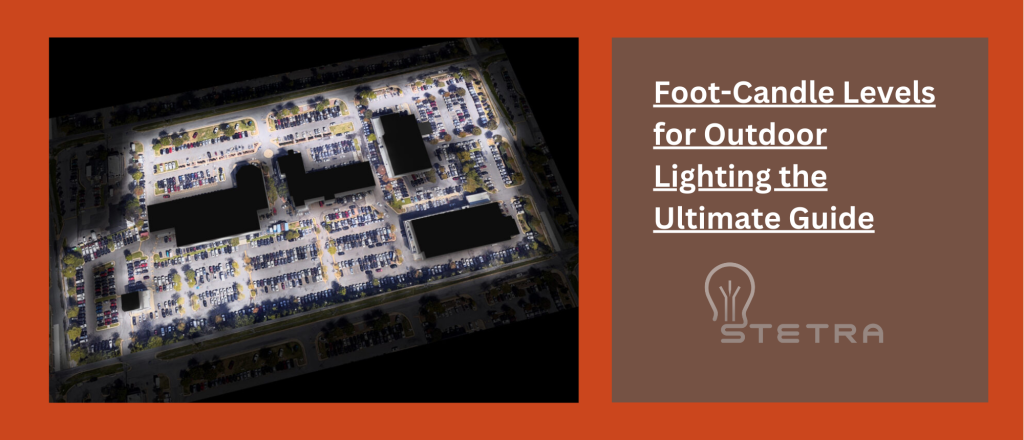
A beautifully illuminated outdoor area at night, showcasing varied foot-candle levels for safety and aesthetics.

Foot-Candle Levels for Outdoor Lighting the Ultimate Guide

Foot-Candle Levels For Outdoor Lighting: The Ultimate Guide Outdoor lighting plays a critical role in enhancing visibility, safety, and aesthetics. Understanding the right foot-candle levels for various outdoor environments is essential to achieve the desired lighting effect while ensuring safety and energy efficiency. What Are Foot-Candles? A foot-candle (fc) is a measurement of light intensity defined as the amount of light reaching a surface one foot away from a uniform light source. This measurement helps determine the adequate brightness needed for different outdoor areas. Why Are Foot-Candle Levels Important? Appropriate foot-candle levels ensure proper visibility, safety, and comfort. They also help designers comply with industry standards and codes. Recommended Foot-Candle Levels For Outdoor Lighting The following tables outline the recommended foot-candle levels and uniformity requirements for various outdoor applications: Table 1: Foot-Candle Levels for Common Outdoor Applications Application Recommended Foot-Candle Levels (fc) Uniformity Ratio (Max to Min) Parking Lots (General) 0.2 – 0.5 15:1 Parking Lots (Enhanced Security) 1.0 – 2.0 4:1 Pedestrian Walkways 0.5 – 2.0 4:1 Building Entrances 5.0 – 10.0 3:1 Roadways (Local) 0.4 – 0.9 6:1 Roadways (Major) 0.9 – 1.2 3:1 Sports Fields (Amateur) 20.0 – 50.0 2:1 Sports Fields (Professional) 50.0 – 150.0 2:1 Loading Docks 5.0 – 10.0 4:1 Factors To Consider When Designing Outdoor Lighting Conclusion Getting the right foot-candle levels for outdoor lighting is essential for safety, aesthetics, and compliance. Whether designing a parking lot, pedestrian walkway, sports field, or roadway, understanding the recommended fc levels and uniformity requirements is the key to successful lighting design. Looking for expert lighting design services? Order a Professional Photometric Plan Now and Ensure Optimal Lighting Performance!” 👉 Want to see how our lighting solutions work in real-world projects? Explore our detailed case studies showcasing successful designs and their impact. 👉 Curious about how photometric plans work? Check out our post: Exploring the Photometric Plan: A Simple Guide to Photometrics to learn everything you need to know.

Foot-Candle Levels for Outdoor Lighting the Ultimate Guide Read More »

Lighting Mistakes

Common Lighting Design Mistakes to Avoid

Lighting design is a crucial element in enhancing the functionality, aesthetics, and ambiance of any space. However, even with the best intentions, there are common mistakes that can compromise the effectiveness and impact of your lighting design. By being aware of these mistakes and avoiding them, you can create well-lit spaces that truly shine. Insufficient Lighting One of the most common mistakes is not providing enough lighting for a space. Inadequate lighting can lead to dark and uninviting environments, making tasks more challenging and reducing overall comfort. It is essential to carefully assess the lighting needs of each area and ensure that there are enough light sources to achieve the desired level of illumination. Poorly Balanced Lighting Balancing lighting is key to creating a visually appealing and functional space. A mistake often made is relying solely on one type of lighting, such as overhead fixtures or task lighting, while neglecting other areas. To avoid this, incorporate a combination of ambient, task, and accent lighting to create layers of light that provide adequate illumination and enhance the overall aesthetics. Ignoring Color Temperature Color temperature refers to the warmth or coolness of light, and it greatly impacts the atmosphere and mood of a space. A common mistake is disregarding the color temperature and using the same lighting throughout different areas. For instance, using cool white light in a cozy living room can create a harsh and unwelcoming environment. It is essential to consider the function and desired ambiance of each space and choose the appropriate color temperature accordingly. Inadequate Lighting Controls Neglecting proper lighting controls can result in inflexible and inefficient lighting designs. Lack of dimmers, timers, or occupancy sensors can lead to wasted energy and discomfort. Incorporating lighting controls allows for flexibility in adjusting lighting levels based on needs, saving energy, and creating a more user-friendly environment. Improper Placement of Lighting Fixtures The placement of lighting fixtures greatly influences the effectiveness of the lighting design. Common mistakes include improper spacing, uneven distribution, or placing fixtures in locations that cast shadows or create glare. To avoid these errors, carefully plan the placement of fixtures, consider the specific requirements of each area, and ensure that the lighting is evenly distributed to avoid inconsistencies. A common mistake with placing the wall washer light The most common mistake is placing the wall washer very near the wall which can result in not even distribution of the light on the wall. To correct this mistake make sure you are giving enough space between the light and the wall. Bellow image is showing the best practices so visually can see that 30 to 36″ of the wall is the safe spacing for placing the wall washer light. Neglecting Light Layering and Focal Points Lighting design should incorporate layers and focal points to create visual interest and highlight specific areas or objects. A common mistake is overlooking the importance of layering, relying only on general lighting without incorporating task or accent lighting. Additionally, failing to create focal points can result in a visually flat and uninspiring space. Consider using lighting to draw attention to architectural features, artwork, or focal points to add depth and character to the design. Avoiding common lighting design mistakes is essential to creating well-lit spaces that are functional, aesthetically pleasing, and comfortable. Achieve a successful lighting design by ensuring sufficient lighting, balancing different lighting types, considering color temperature, incorporating lighting controls, and embracing light layering and focal points. Enhance the overall appeal and functionality of any space with these essential techniques. Remember, thoughtful planning and attention to detail are key to avoiding these common mistakes and creating exceptional lighting designs.

Common Lighting Design Mistakes to Avoid Read More »

CRI-color-render-index

Understanding the Impact of CRI (Color Rendering Index)

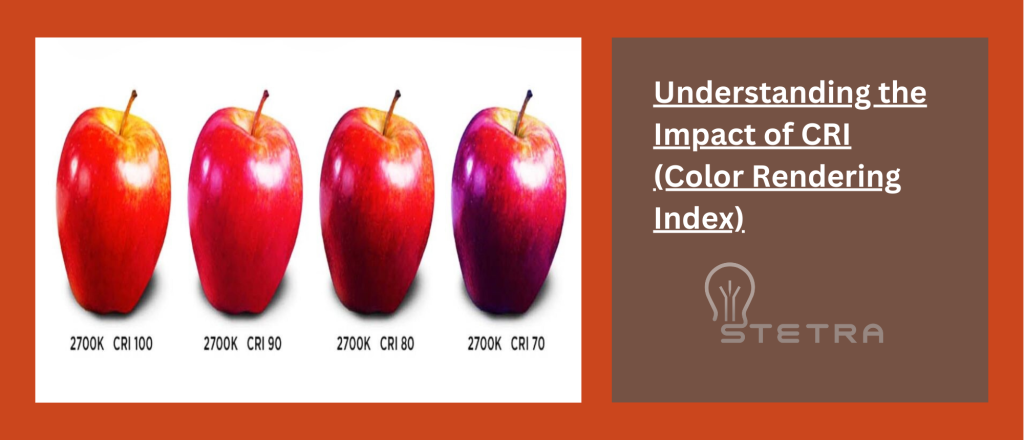
CRI (Color Rendering Index) plays a crucial role when it comes to creating the perfect ambiance and atmosphere in any space. We often consider factors such as brightness and energy efficiency when selecting lighting solutions, but there is another essential element that significantly affects our perception of colors: the Color Rendering Index (CRI). In this article, we will explore the impact of CRI on lighting and understand why it is vital for creating visually appealing and comfortable environments. What exactly is the Color Rendering Index (CRI)? In simple terms, CRI is a quantitative measure that indicates how accurately a light source reproduces the colors of various objects compared to a reference light source. It measures the quality of light by evaluating its ability to reveal the true colors of objects and surfaces. CRI is measured on a scale of 0 to 100, with a higher CRI indicating better color accuracy. Why is CRI important in lighting? The answer lies in our perception of colors and how they influence our experiences. Imagine walking into a room with vibrant artwork, where the colors are vivid and lifelike. High CRI lighting makes this possible by accurately reproducing the colors, allowing us to appreciate the artwork as intended. On the other hand, low CRI lighting can distort colors, making objects appear dull, washed out, or even completely different from their actual hues. The accurate rendering of colors not only enhances the aesthetic appeal but also affects our emotions, well-being, and productivity. Different light sources have varying CRI capabilities Incandescent bulbs, once widely used, have a relatively high CRI, often above 95. However, due to their low energy efficiency, they are being phased out in favor of more efficient options. Fluorescent lights have historically had lower CRI values, resulting in poor color reproduction. However, advancements in technology have led to the development of fluorescent lamps with improved CRI. The most popular lighting solution today, LED (Light Emitting Diode) lights, can also vary in CRI depending on the quality of the LED chips used. High-quality LEDs can achieve excellent color accuracy with CRI values exceeding 90. The impact of CRI extends beyond residential spaces. In commercial and retail settings, where lighting plays a crucial role in product displays and customer experiences, high CRI lighting is especially important. Accurate color reproduction can make merchandise more appealing, influencing purchase decisions. Similarly, in museums and art galleries, high CRI lighting ensures that we present viewers with the true colors and details of the pieces, which is paramount for preserving and showcasing artwork. When selecting lighting products, it is essential to consider the CRI value along with other factors such as color temperature and light distribution. A CRI value of 80 or above is generally considered good, while values exceeding 90 are excellent. It’s also worth noting that different applications may require different CRI values. For instance, in environments where color accuracy is critical, such as hospitals or fashion design studios, people may prefer a higher CRI. In Conclusion Understanding the impact of CRI in lighting is essential for creating visually appealing and comfortable environments. Accurate color rendering enhances our perception of colors, influences our emotions, and improves our overall experiences. Whether you are lighting your home, designing a retail space, or curating an art exhibition, considering the CRI value of lighting products is key to achieving the desired effect. Embrace the power of CRI and let it transform the way you perceive colors in the world around you.

Understanding the Impact of CRI (Color Rendering Index) Read More »

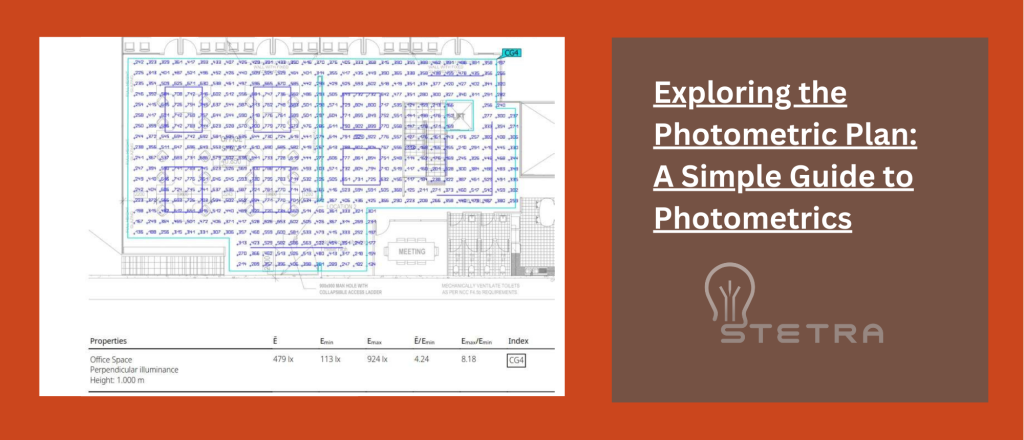
Photometric analysis with illuminance grid overlay on an aerial image, showing foot-candle levels and uniformity calculations for outdoor lighting.

Exploring the Photometric Plan: A Simple Guide to Photometrics

A photometric plan is an essential part of lighting design and the measurement of light. They provide an accurate representation of how light is distributed in a given space, helping designers and engineers create efficient and effective lighting solutions. In this comprehensive guide, we will explore what photometric analyses are, how they are created, and why they are important. What are Photometric Plans? Photometric plans are documents that provide detailed information about the light distribution in a particular area. They are created by measuring the amount of light that falls on a surface from a light source. The resulting photometric plan shows the illumination in fc or lux levels, uniformity, and allows designers to adjust the lighting scheme to achieve the desired effect. Ready to optimize your lighting project with precision and efficiency? Click the button below to get started! Order Your Photometric Plan How do designers create Photometric Plans? Designers create photometric plans to provide a detailed and accurate representation of how light will be distributed throughout a particular space. In this post, we will explore how designers create photometric plans and what factors they consider during the process. Understand the Space Understanding the space being designed is the first step in creating a photometric plan. Designers need to understand the layout, dimensions, and intended use of the space. Determining the type of lighting required and its appropriate placement relies critically on this information. Usually, if it is a parking lot, street, or other outdoor space you can take scale images from Google Earth. Like the below image. Determine Lighting Requirements Once the designer understands the space, they need to determine the lighting requirements. This includes the amount of light required to meet the needs of the space, the type of lighting that is best suited for the space, and the color temperature of the lighting. Select the Right Fixtures After determining the lighting requirements, the designer must select the appropriate fixtures. This includes considering factors such as the fixture’s shape, size, and beam angle. The fixture’s photometric data is also critical in determining its placement and how it will distribute light throughout the space. Use Photometric Software Once the fixtures have been selected, designers use photometric software to create the plan. Photometric software uses complex algorithms to simulate how light will be distributed throughout the space based on the selected fixtures. This software takes into account the placement of the fixtures, the characteristics of the fixtures, and the space being illuminated. Analyze Results After creating the photometric plan, the designer analyzes the results to ensure that the lighting is adequate and that energy efficiency is maximized. The designer may make adjustments to the plan based on the analysis. Which Lighting Industry software is the best for creating photometric reports? Some of the best software in the lighting industry are Dialux EVO and AGI32 Dialux EVO and AGI32 are both popular lighting software programs used by professionals in the lighting industry for designing and analyzing lighting plans. However, they differ in several aspects: How to read a photometric plan A photometric plan contains a lot of data points, with uniformity and the average Fc (foot candles) being the most important aspects to consider. Photometric plan designers prioritize meeting these goals. To read a photometric plan, start with the site plan. 1. Lighting Layout This is usually the first page of the plan, shows the entire project, and includes lighting fixtures. Look for symbols and shapes in bright colors, and note that light fixtures are typically displayed in different colors and numbers. Designers position fixtures strategically to produce optimal lighting coverage and can make changes and recalculate plans to find the best lighting for specific areas. 2. 3D presentation 3D presentation of a light plan can provide an excellent visual representation of how lighting will look and function within a space. Using a 3D model, the lighting designer can create a virtual representation of the room or space, and then add and adjust lighting fixtures to create the desired lighting effect. One of the key benefits of a 3D presentation of a light plan is that it allows the designer to see how the lighting will interact with the space and other design elements, such as furniture or architecture. This can help to identify potential issues or areas where adjustments may be needed before the actual installation of the lighting fixtures. 3. Calculation points Calculation points on the site plan indicate the number of foot candles at a certain point. They can have different spacing but usually are spaced apart around 10 to 20ft. 4. Calculation surface The calculation surface is one of the most important parts of the photometric analysis and shows the distribution ratios and light levels of listed fixtures. Each calculation zone’s statistics must comply with city codes. Useful data in the calculation zone includes: The maximum/minimum ratio indicates the overall distribution of lighting, with lower ratios indicating more uniform distribution and increased visual comfort. The average/minimum ratio shows how the least bright point differs from the average rating. Why are Photometric Plans Important? Photometric plans are important for several reasons. First, they help designers and engineers create efficient lighting solutions that minimize energy consumption and reduce costs. Second, they ensure that the lighting scheme meets the required standards for safety and visibility. Lighting can enhance mood and ambiance, making a space more comfortable and enjoyable. You can find some real-world case studies for the parking lot photometric plans in the following link. How much time is needed to create a photometric plan The time required to complete a photometric report depends on several factors, including the size and complexity of the space, the number of light sources, and the software used for creating the report. Generally, creating a basic photometric report for a small space with a few light sources can take a few hours. However, for larger spaces with complex lighting schemes, creating a detailed and accurate photometric report can take several days. Note

Exploring the Photometric Plan: A Simple Guide to Photometrics Read More »

What Is Color Temperature 1024x1024

Color Temperature Choosing the Perfect Mood

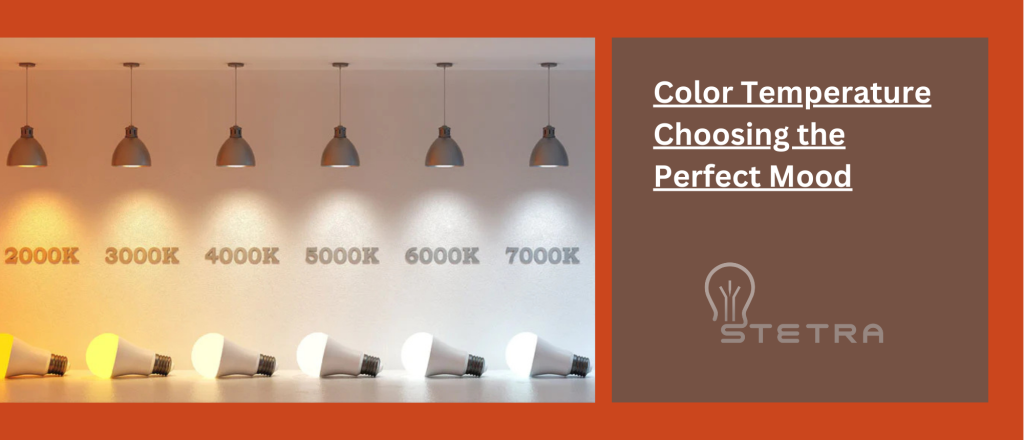
When it comes to creating the ideal atmosphere for any space, color temperature in lighting plays a crucial role. One often overlooked aspect of lighting design is color temperature. The color of light can greatly impact the ambiance, mood, and functionality of a room. Understanding Color Temperature Color temperature refers to the perceived warmth or coolness of light emitted by a light source. It is measured in Kelvin (K) and typically falls within a range of 1000K to 10000K. The lower end of the scale represents warm or yellowish light, while the higher end signifies cool or bluish light. Color temperature is a fundamental aspect of lighting design, impacting not only aesthetics but also functionality. Photometric Analysis for color temperature To ensure the most appropriate color temperature for a lighting project, conducting a photometric analysis is essential. Photometric analysis involves comprehensive measurements and calculations of light distribution, luminance, and illuminance levels. By analyzing this data, designers can make informed decisions about light color and create illumination plans that meet the desired objectives. Lighting Design – Setting the Mood Light color directly influences the ambiance of a space. Warmer color temperatures ranging from 2000K to 3000K create a cozy and inviting atmosphere in areas where relaxation and warmth are desired, such as living rooms or bedrooms. On the other hand, cooler color temperatures between 4000K and 6000K promote focus, productivity, and a bright, energizing feel, making them better suited for workspaces, kitchens, and retail environments. Lighting Calculations While the light color impacts the visual appeal, it’s crucial to strike the right balance between aesthetics and functionality. Lighting calculations, such as determining the appropriate illuminance levels, are crucial in achieving this balance. Proper calculations based on the specific requirements of the space ensure that the lighting design meets the necessary standards while also delivering the desired color. Illumination Plans Creating effective illumination plans involves considering the different lighting requirements of each space within a building. Right light color should be chosen with consideration for the specific purpose of each area. For instance, in a restaurant, warmer color temperatures can evoke a cozy and intimate dining experience, while cooler temperatures in the kitchen area can enhance visibility and cleanliness. As we’ve discovered, light color plays a significant role in lighting design, impacting the ambiance and functionality of any space. By conducting a photometric analysis, designers can make informed decisions about light color, ensuring that it aligns with the desired objectives. By carefully considering lighting calculations and illumination plans, you can achieve the perfect color temperature for each unique lighting application. So, whether you’re aiming to create a relaxing haven at home or a productive workspace, remember that choosing the right color temperature is the key to illuminating success!

Color Temperature Choosing the Perfect Mood Read More »