
Most architects, engineers, and contractors receive photometric plans every week, but very few feel confident reading them. The drawings are full of numbers, contour lines, and ratios that can look more like a weather map than a lighting layout.
This step-by-step guide shows you exactly how to read a photometric plan. You’ll learn what the symbols mean, how to read foot-candle values, and how to quickly check if the design meets your project requirements.
1. Understand What a Photometric Plan Shows
A photometric plan is a lighting drawing that shows calculated light levels on a surface. For site plans, that surface is usually the ground. For interiors, it is the work plane, often 30 inches above the floor. The numbers you see are foot-candles (fc) at each calculation point.
The goal of the plan is simple: prove that the lighting design meets code, safety, and project-specific requirements. Before you dive into details, it helps to understand the main elements: fixtures, calculation grid, iso-footcandle contours, and uniformity ratios.
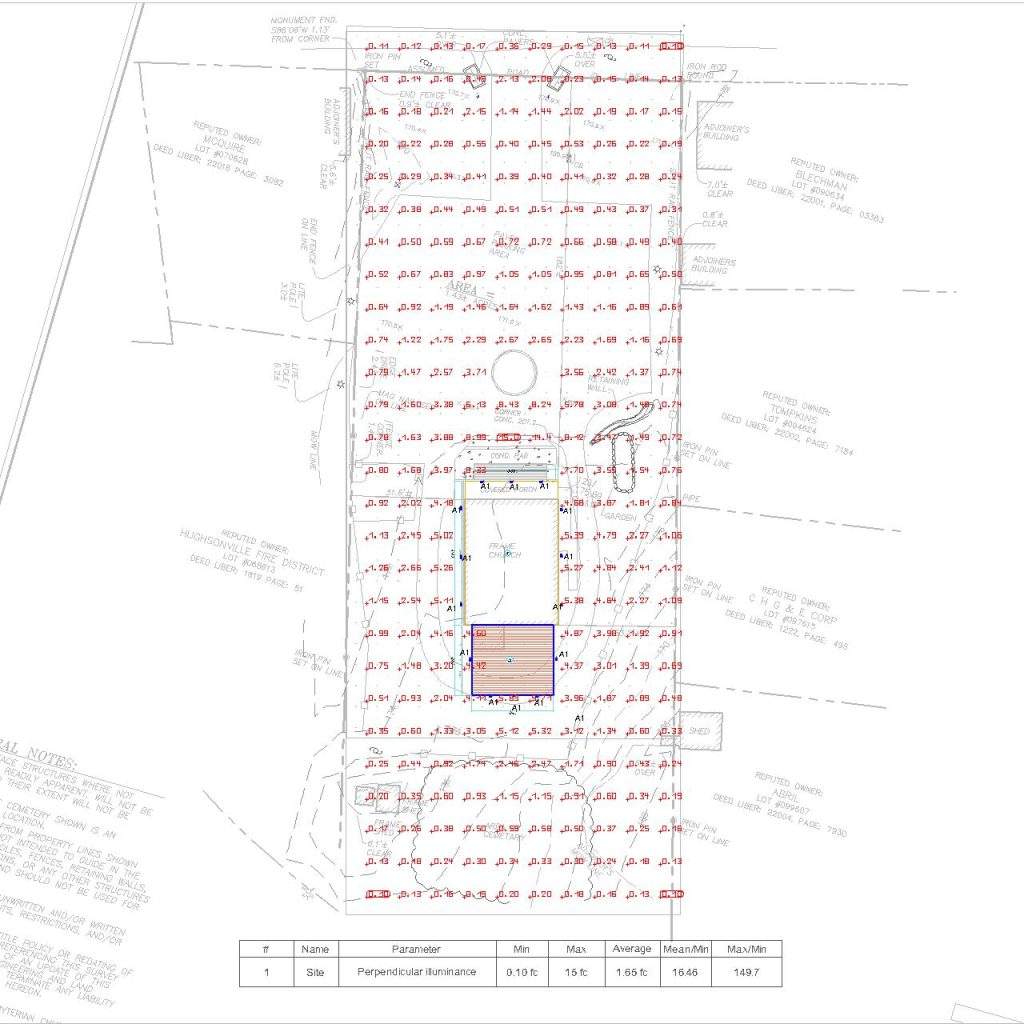
Key Pieces of Every Photometric Plan
Once you know what you are looking at, a photometric plan becomes much easier to read. Focus first on the global structure before you worry about individual numbers.
- Fixture symbols: Poles, wall packs, canopies, or interior fixtures marked with tags like A1, B2, etc.
- Calculation grid: A regular grid of points where the software calculates foot-candle values.
- Contours and tables: Values-footcandle numbers and summary tables showing average, minimum, and maximum light levels.
2. Read the Legend, Light Levels, and Ratios Step by Step
Every photometric plan has a legend or notes panel. This is your starting point. It explains which symbol is which fixture, what mounting height is used, and which surface the light levels are calculated on. Then you can move on to reading the foot-candle values and uniformity ratios.
- Step 1 – Start with the legend. Match fixture tags (A1, B1, etc.) to fixture descriptions, wattage, distribution type, and CCT.
- Step 2 – Check mounting height. Confirm pole height or ceiling height, and whether arms, tilt, or slope ceilings are involved.
- Step 3 – Read the grid numbers. Each number is a calculated foot-candle at that point. Compare them to your target levels for the space.
- Step 4 – Review uniformity ratios. Look for values like Avg/Min and Max/Min. Lower ratios mean more even lighting.
- Step 5 – Scan for dark spots and hot spots. Very low fc between poles or extremely bright areas near fixtures can cause safety or glare issues.
Practical Details to Check on Every Plan
For quick reviews, you can focus on a short checklist. It will help you decide if the photometric plan is realistic, code-compliant, and buildable.
- Calculation surface: Is the plan using the correct plane (ground, floor, work plane, horizontal vs vertical)?
- Average and minimum fc: Do they meet your local or project requirements for that area type?
- Edges and property lines: Are light levels and spill within limits for neighboring properties and dark-sky rules?
- Fixture counts: Does the fixture schedule match the quantity and locations shown on the drawing?
- Realistic optics: Confirm that the IES files and distributions used make sense for the application.
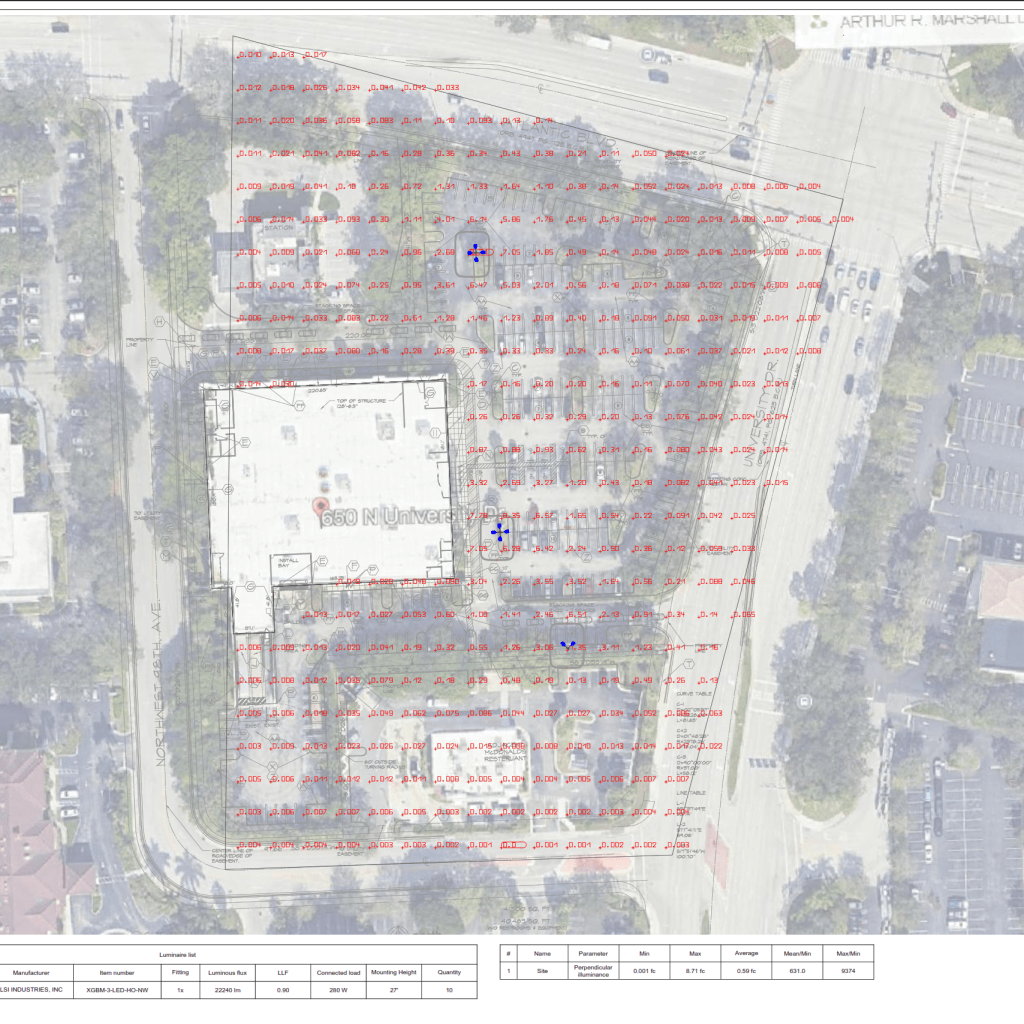
3. Example: Reading a Parking Lot Photometric Plan
Let’s look at a typical outdoor parking lot as an example. The same process applies to warehouses, offices, sports courts, or any other application where you receive a photometric layout with IES-based calculations.
- Project / context: Medium-size commercial parking lot with drive lanes, parking bays, and pedestrian paths. The goal is safe visibility for drivers and people walking at night.
- Challenge: The original layout had bright spots directly under poles but very low light levels in the middle of the bays and along the property line, causing poor uniformity and potential safety concerns.
- How we read the plan: We checked average and minimum foot-candles in drive lanes and parking areas, reviewed iso-footcandle contours, and verified that property line levels stayed within local code limits.
- Result: After adjusting pole spacing, optics, and aiming, the final photometric plan showed higher minimum fc, improved Avg/Min ratios, and smoother transitions between fixtures, while still meeting energy and glare requirements.
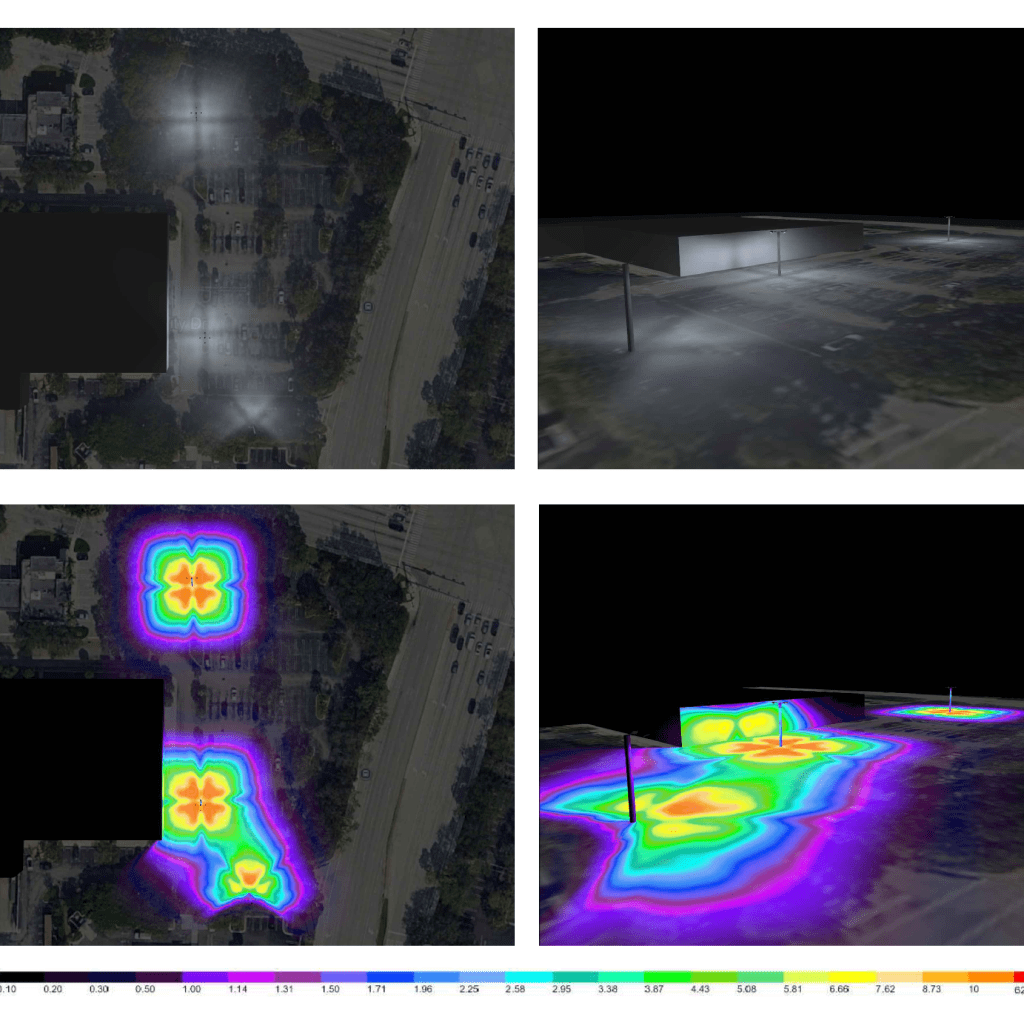
When you know how to read a photometric plan, you can have much clearer conversations with your lighting designer. You can ask for targeted changes instead of vague comments like “it feels dark” or “can we just add a few more lights?” Here are some examples of the photometric plans that we create.
Get a Professional Photometric Plan
Key Takeaways
Reading a photometric plan does not have to be complicated. Start with the legend, understand what the numbers and contours represent, and then focus on light levels and uniformity in the key task areas. With a simple checklist, you can review drawings quickly and spot issues before they become field problems.
If you need support reading or creating photometric plans for your projects, Stetra Lighting can help. We translate the calculations into clear recommendations and deliver layouts that are ready for real sites, real fixtures, and real people using the space.