
The primary difference between 3000K and 5000K lighting is the color of the light output. 3000K produces a warm, yellowish-white light suitable for creating a comfortable, inviting atmosphere. In contrast, 5000K emits a cool, neutral-white light similar to natural daylight, which promotes alertness and focus. The correct selection depends on the functional requirements of the space.
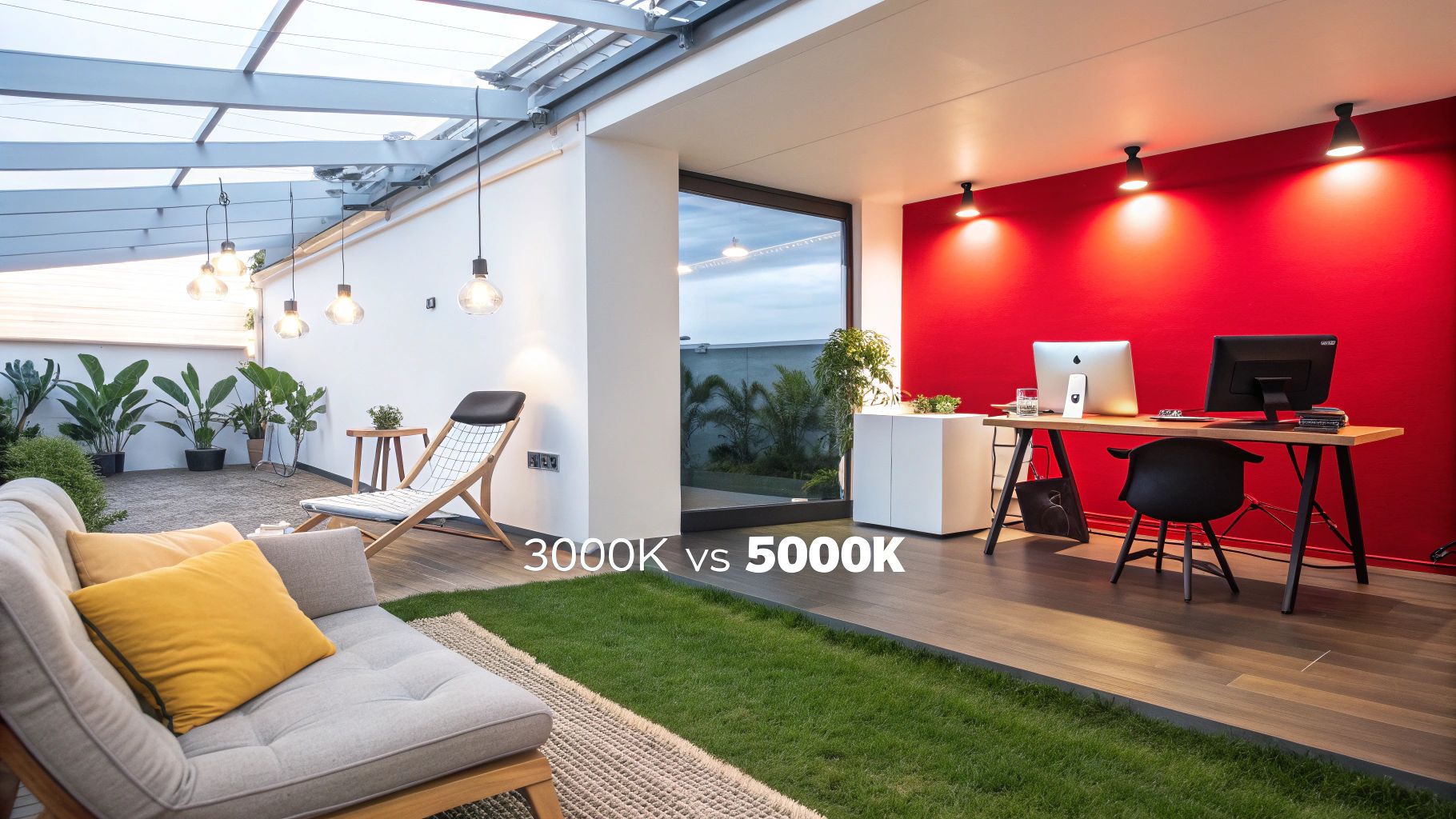
Core CCT Attributes
Correlated Color Temperature (CCT) is a critical specification in lighting design. Measured in Kelvin (K), it defines the perceived warmth or coolness of a light source. For architects, engineers, and contractors, deciding between 3000K and 5000K is a fundamental choice that directly impacts occupant perception and project performance goals.
This decision affects more than just aesthetics; it has measurable consequences for photometric performance and visual comfort. For a deeper explanation of how different temperatures shape an environment, explore our guide on choosing the perfect color temperature.
Technical Comparison of 3000K vs 5000K
The distinction lies in the spectral power distribution of the light. A 3000K source has more energy in the yellow and red parts of the spectrum, while a 5000K source has a higher concentration of blue light. This difference influences not only atmosphere but also key technical metrics like luminous efficacy and color rendering.
The table below summarizes the key attributes and common applications for each CCT.
| Attribute | 3000K (Warm White) | 5000K (Cool White) |
|---|---|---|
| Visual Appearance | Soft, yellowish-white | Crisp, neutral-white |
| Primary Atmosphere | Relaxing, comfortable, intimate | Alert, focused, task-oriented |
| Common Applications | Hospitality, high-end retail, lounges | Offices, industrial, healthcare, labs |
| Perceived Brightness | Softer, less intense | Higher, more stimulating |
| Psychological Effect | Promotes relaxation and calm | Enhances concentration and acuity |
This technical foundation is essential for aligning lighting specifications with the functional goals of a commercial space. Understanding these differences ensures the final design meets both aesthetic and performance criteria.
Impact on Visual Perception and Atmosphere
The decision between a 3000K and 5000K light source fundamentally shapes the visual experience and psychological perception of a commercial space. CCT is a primary tool for influencing how occupants interact with their environment.

Defining Space Function with CCT
A 3000K light source produces a warm, yellowish-white light that makes an environment feel relaxing and intimate. This quality makes it a standard specification for hospitality settings, high-end retail, and common areas where occupant comfort is the primary goal. It promotes a sense of calm.
Conversely, the cool white light from a 5000K source contains a higher amount of blue light, which is known to stimulate alertness and focus. This makes it the preferred choice for task-oriented environments like offices, laboratories, and industrial workshops where precision and concentration are required. It mimics daylight, which helps reduce perceived fatigue during demanding work.
The core principle is to align the lighting with the intended activity. The 3000K vs 5000K decision should directly support whether the space is designed for relaxation or for high-performance tasks. While CCT sets the overall tone, it is also important to consider how the Color Rendering Index (CRI) affects color fidelity. Learn more by understanding the impact of CRI (Color Rendering Index).
How CCT Affects Photometric Performance
The choice between 3000K and 5000K has measurable consequences for a lighting system’s performance. CCT directly influences the photometric metrics that determine if a design is effective, comfortable, and compliant with code.
In specifications, 5000K LEDs often show a slightly higher luminous efficacy (lumens per watt). This may seem advantageous for energy calculations, but the increased perceived brightness can create discomfort glare without proper optics, shielding, and fixture placement.
Glare and Color Fidelity Considerations
The cooler tone of 5000K light is often perceived as harsher, making a detailed photometric analysis essential for ensuring visual comfort. Key metrics like the Unified Glare Rating (UGR) for interiors or BUG ratings for exterior fixtures must be evaluated in conjunction with CCT selection.
Color rendering is also critical. The Color Rendering Index (CRI) and TM-30 values shift with CCT, affecting color accuracy. This is a primary consideration in retail and healthcare environments where true color perception is a functional requirement. To understand how these metrics are verified, read our practical guide to photometric analysis.
CCT’s Impact on Occupant Performance
In commercial offices, some studies suggest that 5000K lighting can improve productivity compared to warmer 3000K tones. Light that mimics natural daylight may enhance alertness and visual clarity, reducing eye strain during detailed tasks.
For example, a 2022 IES survey noted that firms switching to 5000K reported a decrease in complaints of employee fatigue. For more data on CCT comparisons, you can discover more insights about CCT comparisons.
Interior Application and Use Case Guidance
Selecting the appropriate CCT for an interior space directly impacts task performance and visual comfort. The choice between 3000K vs 5000K depends on the intended function of the space. A strategic, space-by-space approach is necessary.

Office and Workplace Lighting
An effective strategy for modern offices often involves a mix of CCTs. For open-plan areas where focus and alertness are required, 5000K is a suitable choice. It provides crisp, daylight-mimicking light that supports productivity.
In contrast, 3000K is better suited for break rooms, collaborative lounges, and reception areas. Its warm glow creates a more relaxed and social atmosphere for decompression. For further details, see our lighting workplace guide.
Healthcare and Laboratory Applications
In clinical settings, CCT selection is driven by the need for diagnostic accuracy. Examination rooms, surgical suites, and laboratories require 5000K lighting to ensure high color fidelity for precision tasks. Research indicates that 5000K can improve diagnostic accuracy compared to 3000K, as the cooler tone supports the high CRI needed to identify subtle visual details. You can read the full research about these findings.
Patient recovery rooms and waiting areas are appropriate applications for 3000K. It creates a calmer, less clinical environment conducive to healing.
Retail and Hospitality Spaces
For retail environments, lighting must enhance the merchandise.
- 3000K: This CCT is effective for enhancing warm-toned goods such as wood furniture, baked items, and rich fabrics. It creates a welcoming, high-end ambiance.
- 5000K: This CCT is used for accurate color rendition. It is ideal for electronics, apparel, and cosmetics, where true color perception is a critical factor in purchasing decisions.
Exterior Application and Site Lighting Guidance
For exterior projects, the 3000K vs 5000K decision depends on the primary goals: safety, security, or atmosphere. This choice impacts visibility, environmental considerations, and local code compliance.
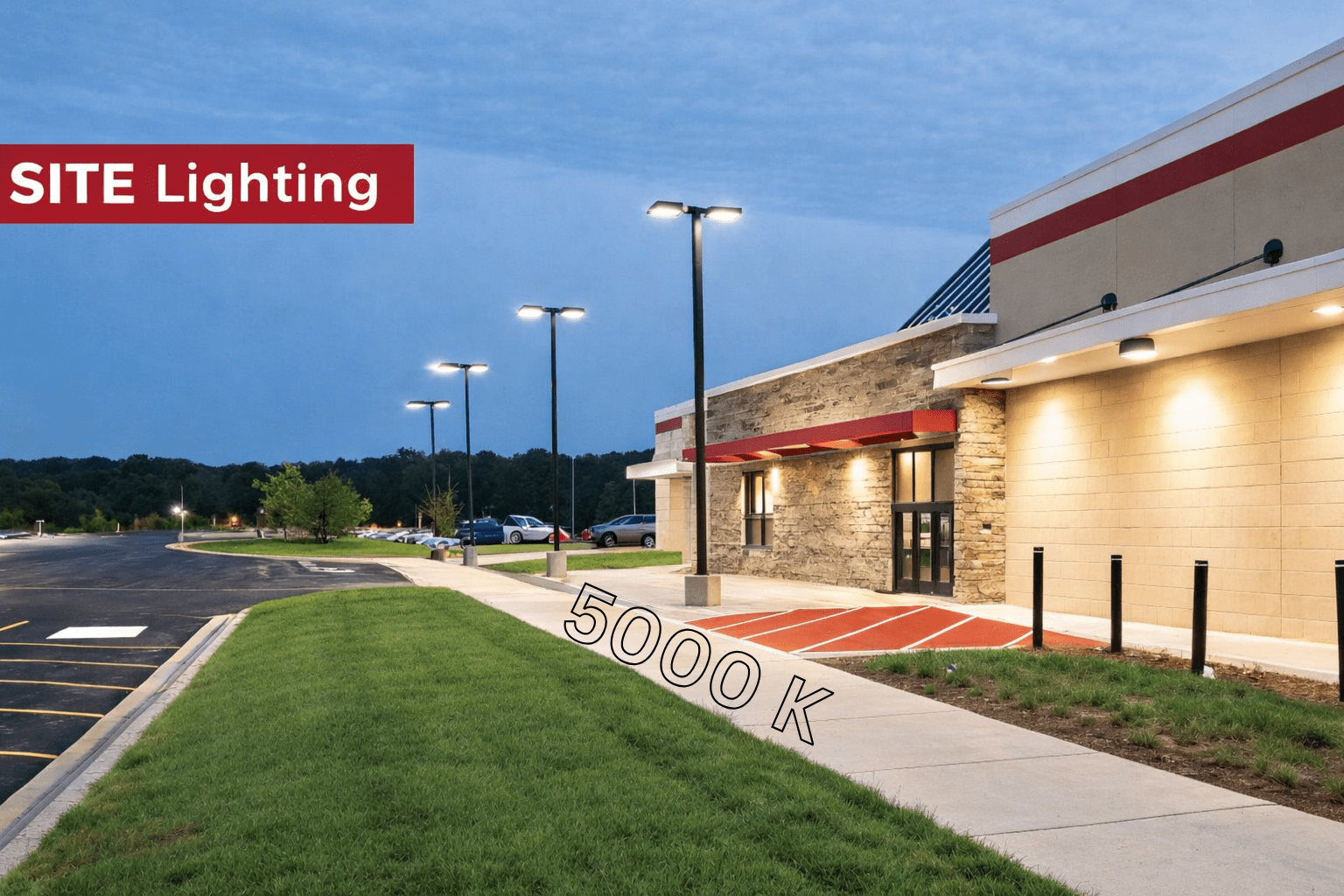
Prioritizing Security and Visibility
If high visibility and clear surveillance footage are primary requirements, 5000K is the standard choice. It is specified for parking lots, loading docks, and building perimeters where safety is the top priority. Its crisp, high-contrast light improves hazard detection and facial recognition on security cameras.
Studies suggest that 5000K lighting can reduce nighttime accidents compared to warmer CCTs. Warmer light can reduce contrast and blend shadows, which is a significant factor in safety-critical applications. More information is available in lighting research on street and site applications.
Balancing Aesthetics and Compliance
3000K is the preferred choice for architectural facades, pedestrian pathways, and public plazas. Its purpose is to create a welcoming and aesthetically pleasing environment. The warmer tone is perceived as less harsh, making it a better fit for projects where occupant comfort is prioritized over clinical illumination.
A critical consideration for exterior lighting is local ordinances. Many municipalities and sensitive ecological zones have codes restricting CCT to 3000K or lower to minimize sky glow and environmental impact. Regardless of CCT, controlling light trespass with properly shielded optics and appropriate BUG ratings is mandatory. To verify that a design is compliant, project teams can order a photometric plan. This analysis validates that the chosen 3000K vs 5000K strategy meets all performance targets and regulatory requirements before installation.
Specification and Project Compliance
Correctly specifying CCT in project documentation is a critical step. The choice between 3000K vs 5000K must be clearly defined to prevent installation errors.
Consistency is key. Unless part of a deliberate design strategy, different CCTs should not be mixed within the same visual field. Fixture schedules, photometric plans, and construction documents must clearly state the required CCT, lumen output, and optics for every luminaire. This precision ensures the final build matches the design intent.
Documenting CCT for Approval
CCT selection must also account for interior finishes. Materials reflect warm and cool light differently, which can alter the perceived color of paints, fabrics, and surfaces. A warm 3000K source will enhance wood tones, while a cool 5000K source might desaturate them.
Furthermore, minor differences in efficacy between CCT options can impact compliance with energy codes like ASHRAE 90.1 or Title 24. It is essential to verify that the specified fixtures meet both performance targets and regulatory requirements. You can find additional resources on lighting compliance.
To ensure design targets and municipal codes are met, the most reliable method is to conduct a professional lighting simulation. This analysis models the interaction between CCT, fixture optics, and placement to confirm compliance before installation. Stetra Lighting provides permit-ready documentation that models light levels, uniformity, and glare control, ensuring the specified CCT choice delivers the intended outcome. This verification step is invaluable for securing project approvals and avoiding costly rework.