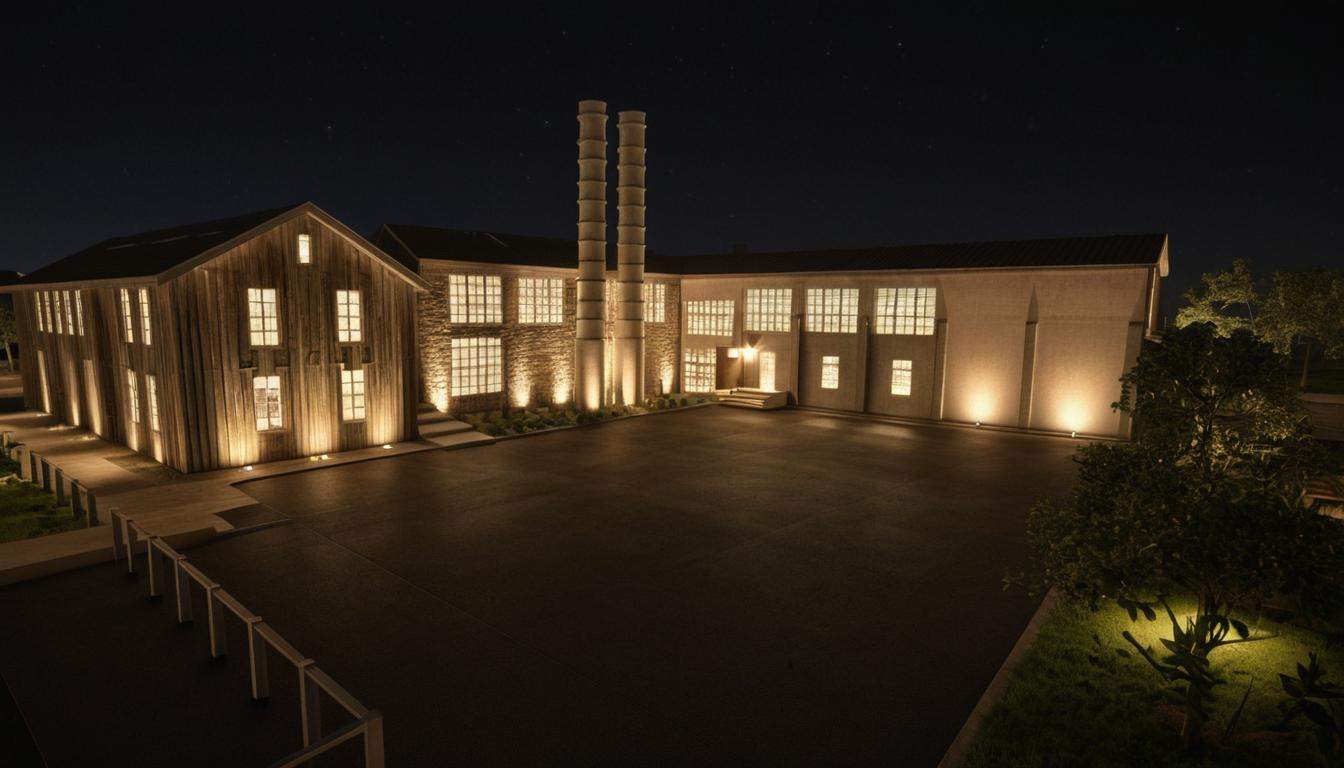
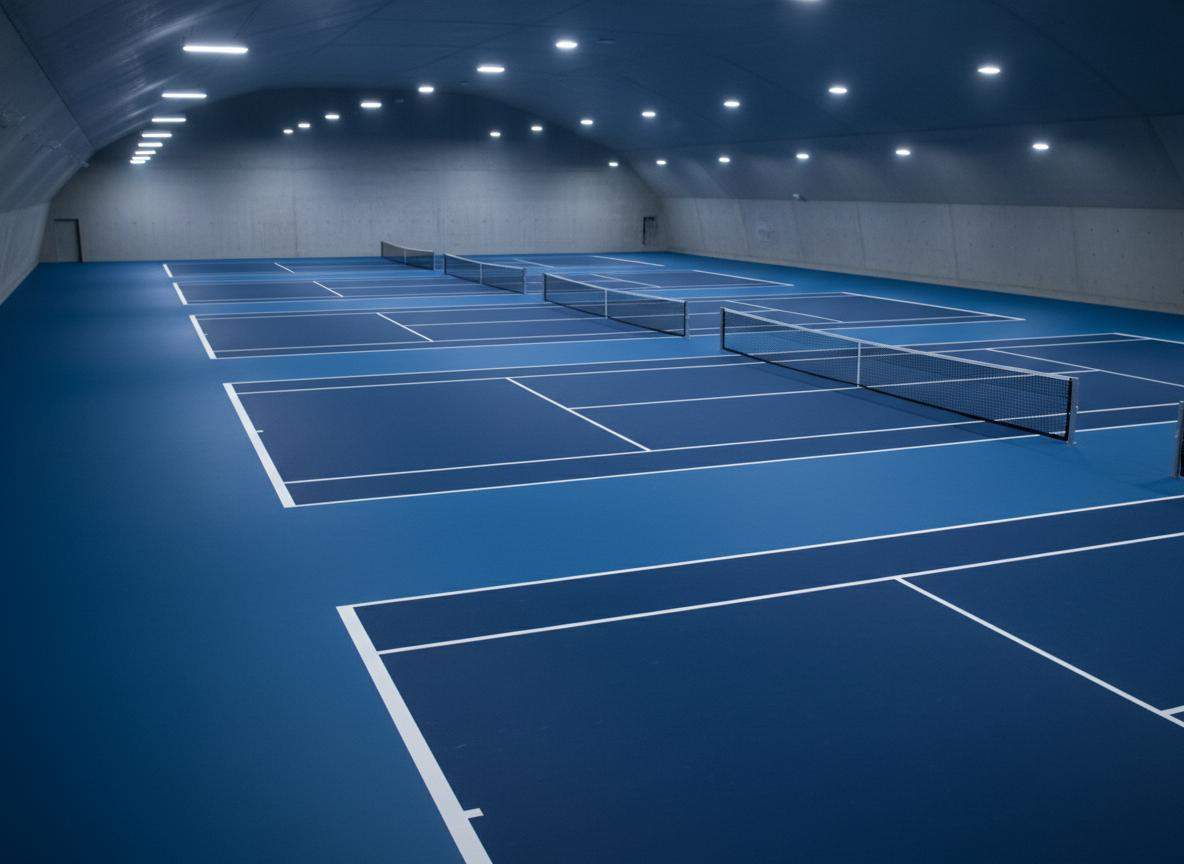
This guide explains the foot candle requirements by area for parking lots, warehouses, offices, and sports fields. Understanding these values helps ensure safety, visibility, and proper lighting design.
Each section includes a clear table, short explanations, and practical notes to help architects, engineers, contractors, and lighting designers plan accurate photometric layouts.
Parking Lot Foot-Candle Requirements
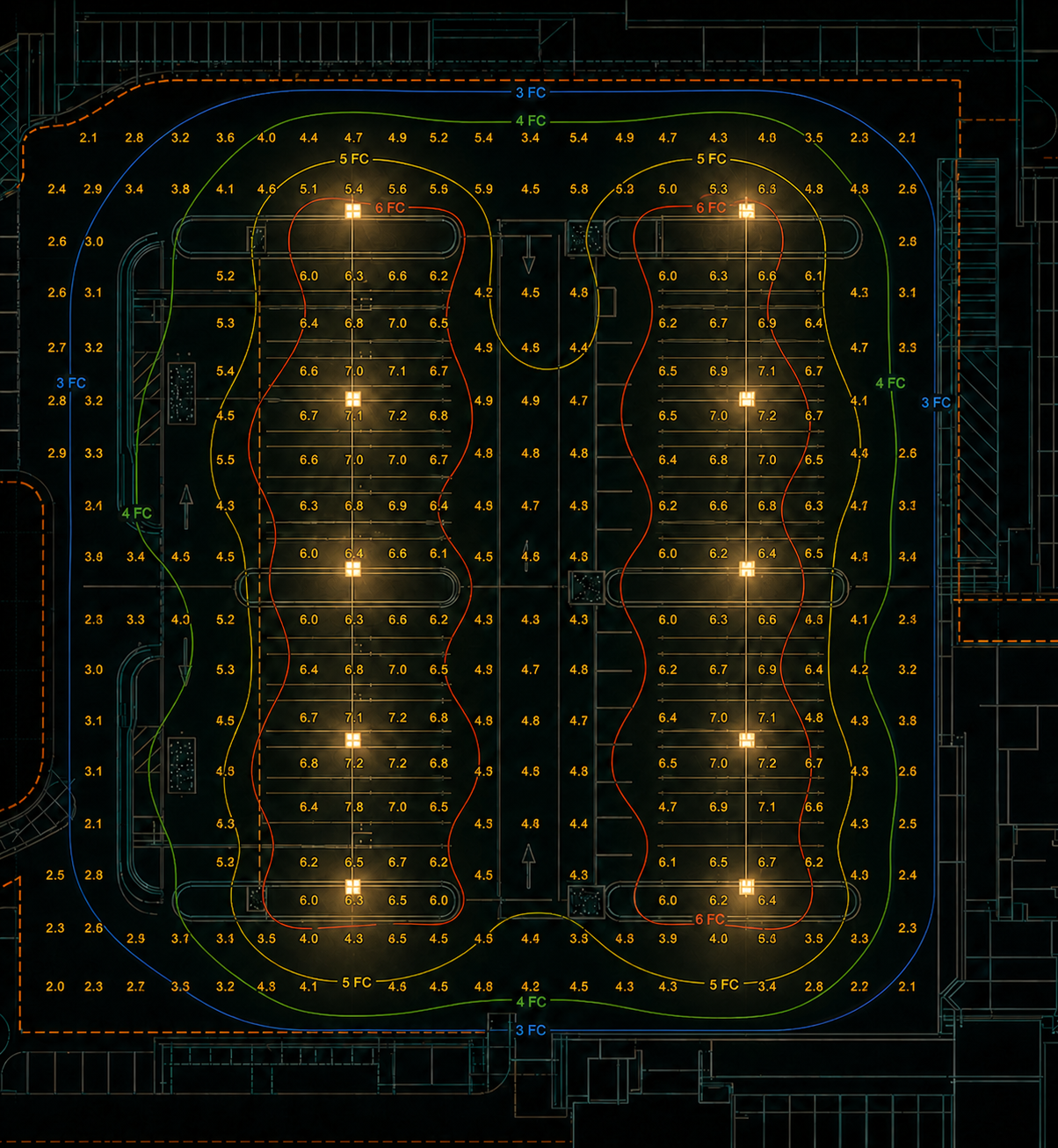
Parking lots require low but uniform lighting to support safe vehicle and pedestrian movement. These values provide a reliable baseline when preparing exterior lighting plans.

Why Parking Lots Need Consistent Light Levels
Low exterior illumination can create dark spots and unsafe conditions. Proper foot-candles and uniformity ratios ensure consistent visibility for drivers and pedestrians while controlling glare.
- Improves nighttime visibility and perceived safety.
- Helps prevent dark zones and harsh contrast.
- Supports compliance with local lighting codes.
| Parking Area Type | Recommended Foot-Candles | Uniformity (Avg:Min) |
|---|---|---|
| Basic parking | 0.5–1.0 fc | 15:1 |
| Commercial parking | 1.0–2.0 fc | 10:1 |
| High-activity areas | 2.0–3.0 fc | 6:1 |
| Security zones | 3.0–5.0 fc | 4:1 |
For additional guidance beyond these ranges, you can review the official IES lighting recommendations for different exterior and interior applications.
Warehouse Foot-Candle Requirements
Warehouses include a wide range of tasks, from bulk storage to detailed inspection. Illumination must support safe movement, accurate picking, and consistent visibility between racks.
- Higher ceilings require more delivered lumens at the workplane.
- Picking zones need stronger task illumination than bulk storage.
- Inspection areas require the highest visibility and contrast.
Lighting Requirements by Activity Level
The required illumination increases as tasks become more detailed. High-bay LED luminaires help maintain consistent brightness across aisles and storage racks, giving workers clear visibility of labels, pallets, and signage.
- Storage: low to moderate light levels.
- Packing: brighter task lighting over tables and conveyors.
- Inspection: highest illumination for color and defect checks.

| Warehouse Area | Recommended Foot-Candles |
|---|---|
| Bulk storage | 10–20 fc |
| General aisles | 20–30 fc |
| Packing & sorting | 30–50 fc |
| Inspection / Quality Control | 50–70 fc |
These warehouse targets fit into the broader foot candle requirements by area used for modern industrial lighting design.
Classroom & Educational Space Foot-Candle Requirements
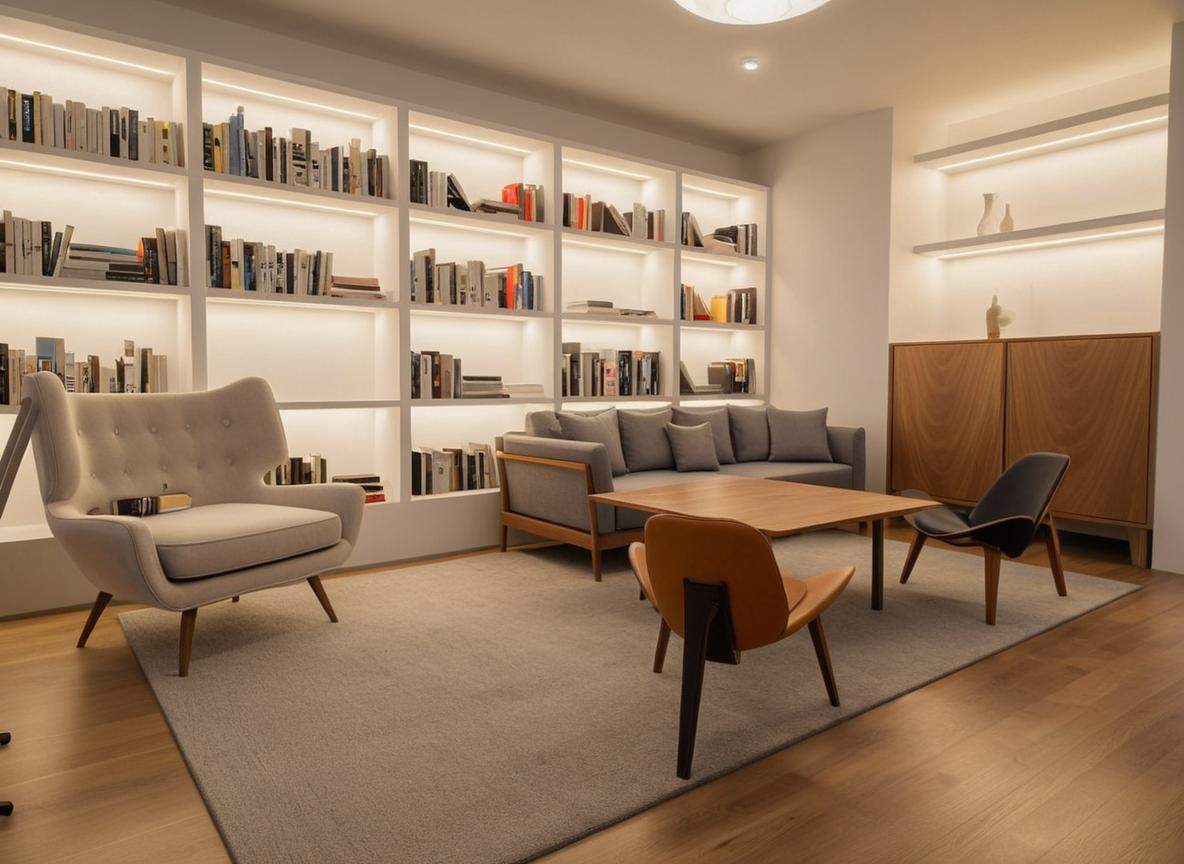
Classrooms and educational environments require balanced, glare-free illumination to support reading, writing, presentations, and digital screens. Proper foot-candles help reduce eye fatigue and improve student focus and visibility.
- General classrooms require higher foot-candles for reading and writing tasks.
- Science and computer labs need brighter, well-balanced illumination.
- Lecture halls and multipurpose rooms benefit from controlled lighting for presentations.
| Classroom Area | Recommended Foot-Candles |
|---|---|
| General classroom | 30–50 fc |
| Science lab | 50–75 fc |
| Computer lab | 25–40 fc |
| Lecture hall | 20–30 fc |
| Library / study areas | 30–60 fc |
Office & Commercial Foot-Candle Requirements
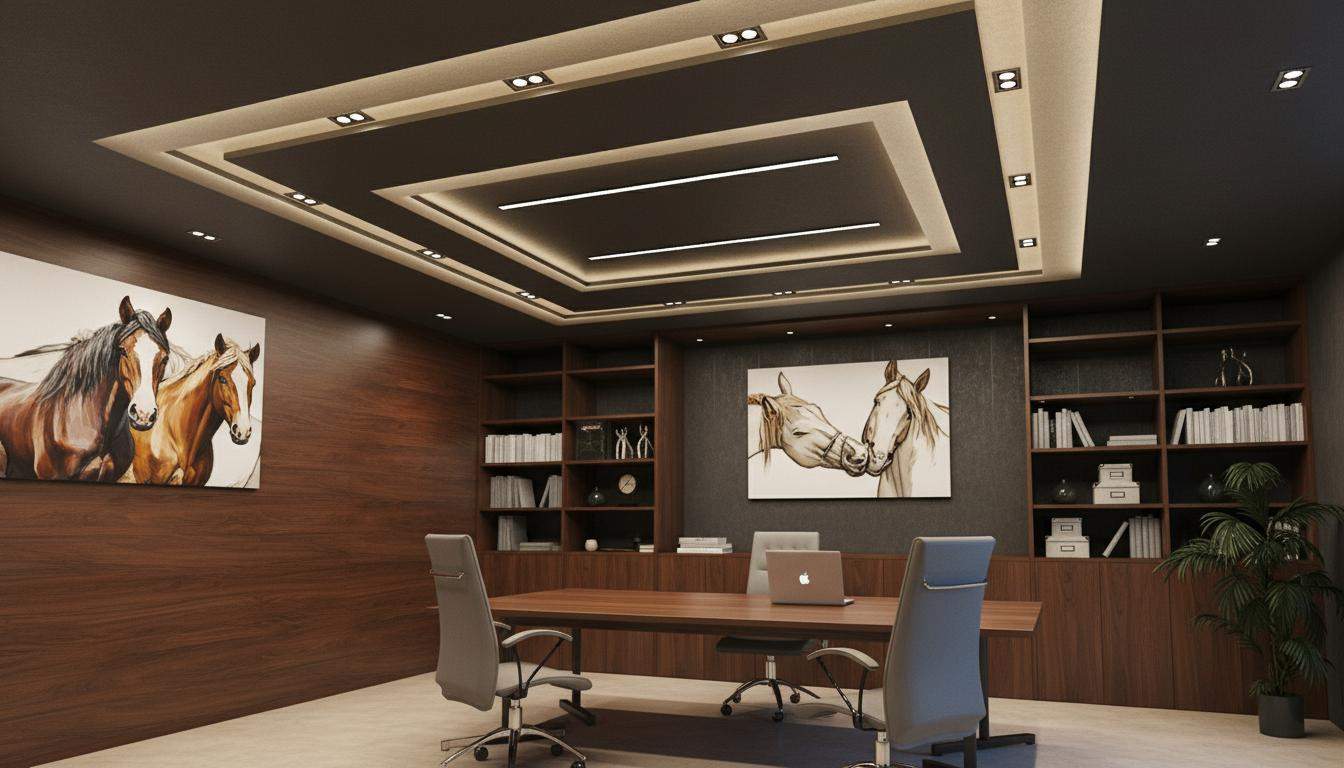
Office environments require balanced illumination for reading, computer work, collaboration, and circulation. Proper lighting reduces eye strain and supports a comfortable workplace.
- Task areas such as desks need higher foot-candles.
- Conference rooms require balanced, low-glare lighting.
- Corridors, lobbies, and support spaces operate at lower levels.
| Office Area | Recommended Foot-Candles |
|---|---|
| General office work | 30–50 fc |
| Conference rooms | 30–40 fc |
| Reception | 20–30 fc |
| Hallways / corridors | 10–20 fc |
Sports Field Foot-Candle Requirements
Sports fields demand higher illumination due to fast player movement, long viewing distances, and, in some sports, small ball sizes. Proper lighting improves safety, accuracy, and performance for both athletes and officials.
- Competitive play requires higher light levels than casual recreation.
- Uniformity is just as important as peak brightness.
- Beam control and aiming help prevent glare and off-site spill.

Why Sports Lighting Needs Higher Intensity
Athletes must clearly see the ball, other players, and field markings. Higher foot-candles improve reaction time, reduce shadows, and support professional-quality play under lights.
- Improves visibility for referees, coaches, and players.
- Reduces the risk of accidents during fast action.
- Creates a consistent viewing experience for spectators.
| Sport Type | Recommended Foot-Candles | Notes |
|---|---|---|
| Football / Soccer (Recreation) | 20–30 fc | Suitable for community fields |
| Football / Soccer (Competition) | 30–50 fc | Supports faster play and better visibility |
| Tennis (Recreation) | 30–50 fc | Small ball requires higher visibility |
| Tennis (Competition) | 50–75 fc | High uniformity required |
| Baseball / Softball – Infield | 50–70 fc | High-speed ball tracking near home plate |
| Baseball / Softball – Outfield | 30–50 fc | Lower criticality than infield |
Sports lighting is one of the most demanding parts of the overall foot candle requirements by area used for outdoor photometric planning.
Get a Professional Photometric Plan
We create accurate photometric plans ready for permitting, contractor installation, and real-world performance.
Key Takeaways
Each application requires specific lighting levels to ensure visibility, comfort, and safety. Parking lots need low but uniform light. Warehouses depend on task-based illumination. Offices require balanced, glare-free lighting. Sports fields demand the strongest and most uniform illumination on the list.
If you need an accurate photometric plan for your project, Stetra Lighting provides fast, professional results tailored to real-world conditions and local requirements.